

Dentures in Glendale, AZ
Replace missing teeth with custom dentures designed to restore your bite, speech, and everyday comfort.
What Are Dentures and How Do They Work?
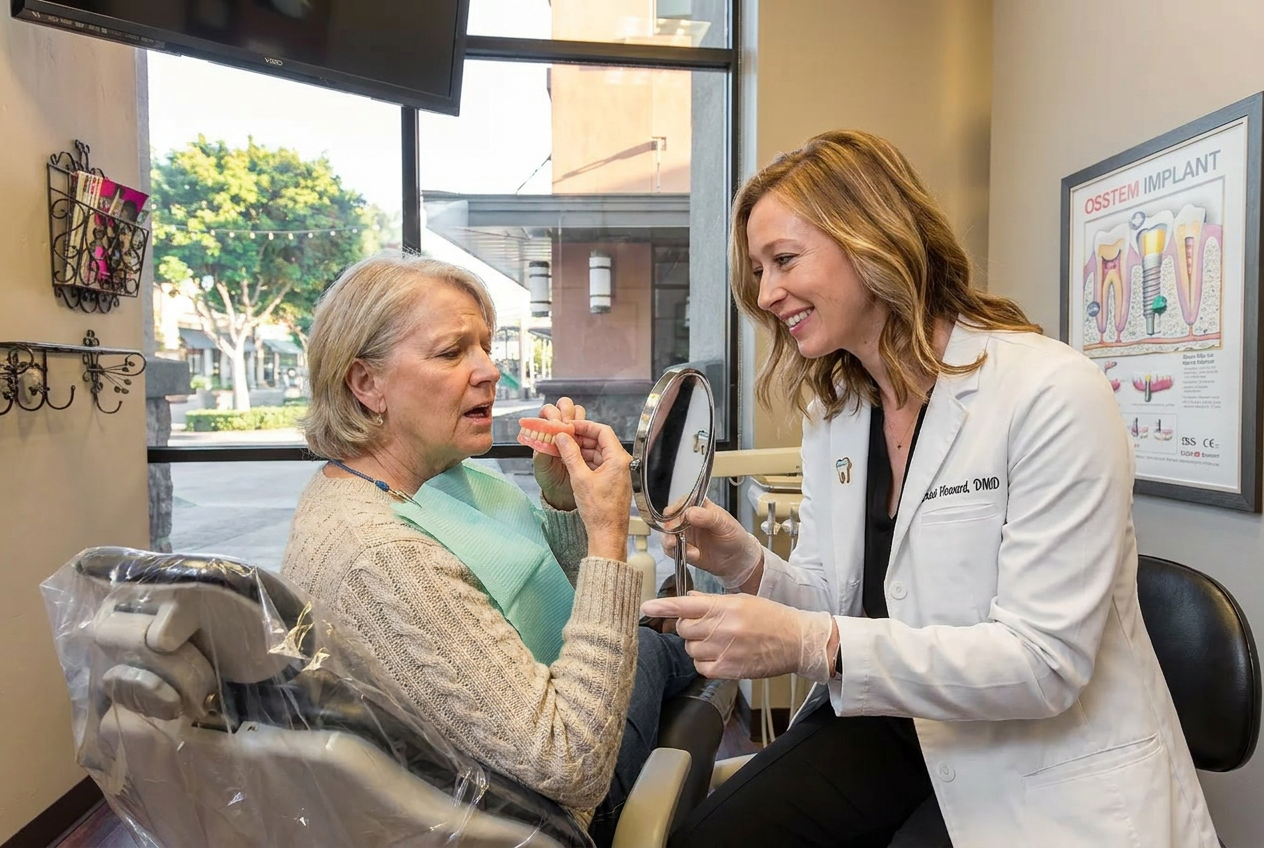
Struggling to eat the foods you love or feeling self-conscious about gaps in your smile can wear you down over time. Dentures replace missing teeth with a custom-fitted removable appliance that restores your ability to chew, speak clearly, and smile without hesitation. You can get a full set to replace an entire arch or a partial that fills in specific gaps while working around your remaining healthy teeth.
At Arrowhead Foothills Family Dentistry in Glendale, AZ, your dentist takes detailed impressions so the fit feels secure and natural against your gums. The base is made from a gum-colored acrylic, and the replacement teeth are shaped and shaded to match what your natural teeth looked like. Before starting, the team typically recommends exams & x-rays to check your jawbone and gum tissue, so your dentures are built on a solid foundation.
Benefits of Dentures
Dentures replace what's missing and give you back the everyday things you may have been working around for months or even years.

Bite Into Real Food Again
Gaps and failing teeth limit you to soft foods. A well fitting set of dentures lets you chew with enough force to enjoy chicken, fresh vegetables, and foods you avoided.
Your Face Keeps Its Shape
Missing teeth cause the muscles around your mouth and jaw to sag over time. Dentures support your facial structure from the inside, keeping your profile looking natural.

Speak Clearly With Ease
Gaps can make certain sounds slip or whistle. Dentures fill those spaces so your tongue and lips work together naturally, and most patients adjust within a few weeks.
Who Benefits from Dentures?
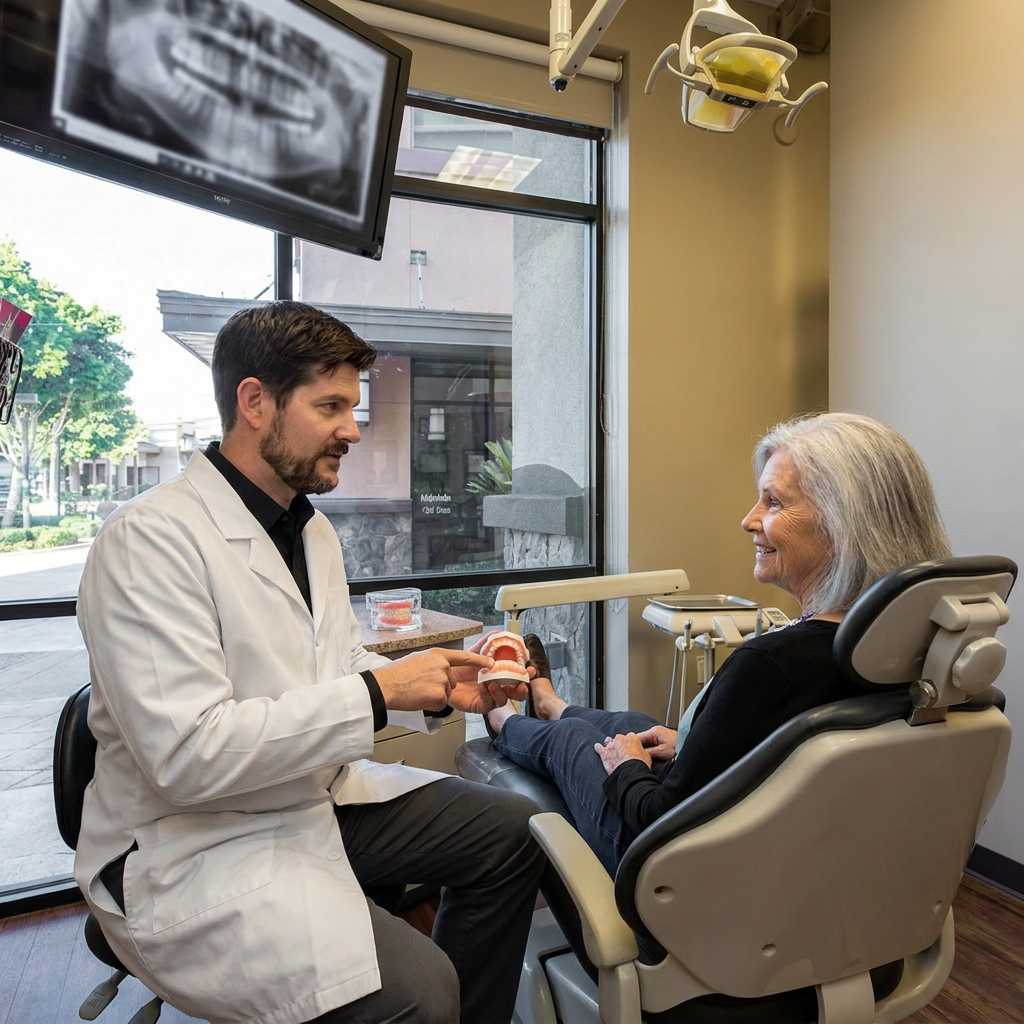
Losing several teeth changes more than your appearance. Chewing becomes difficult, speech feels different, and you may start avoiding foods you used to enjoy. Some patients lose teeth gradually over years due to gum disease or decay. Others face extractions after an injury. In both cases, dentures replace what's missing and give your jaw the support it needs to function normally again.
Younger adults sometimes need partial dentures after losing a few teeth, while older patients often do well with a full set. Your dentist at Arrowhead Foothills Family Dentistry will evaluate your gums, bone structure, and remaining teeth during exams & x-rays to recommend the right fit. Dentures today are lighter and more natural-looking than most people expect, and they hold up well with routine care.
What to Expect During Your Visit
Your first visit starts with impressions of your gums and any remaining teeth. The dentist takes precise measurements of your bite and jaw alignment so the lab can build dentures that fit your mouth specifically. If teeth need to come out first, that work can often happen at the same appointment. You'll leave with a clear timeline for your final set.
Once your dentures are ready, you'll come back for a fitting. Minor adjustments are normal, especially in the first few weeks as your gums adapt. Soft foods help during that adjustment window. Most patients feel confident eating and speaking within a couple of weeks, and a follow-up visit lets the team fine-tune the fit.

Before Your Appointment
- 01
Eat a solid meal before your appointment, since fitting adjustments can leave your gums tender for the first few hours.
- 02
Bring any current dentures or partials you own, even old ones, so your dentist can compare fit and bite alignment.
- 03
Write down specific trouble spots where you feel soreness or slipping, so the team can focus on those areas during impressions.
After Your Appointment
- 01
Remove your dentures each night and soak them in a denture-cleaning solution so the acrylic stays fresh and bacteria-free.
- 02
Rinse your gums with warm salt water after meals for the first week to reduce irritation from the new base pressing against tissue.
- 03
Stick to softer foods like mashed potatoes and soup for the first few days, then gradually add firmer items as your gums adjust.
How Modern Denture Technology Improves Fit and Comfort
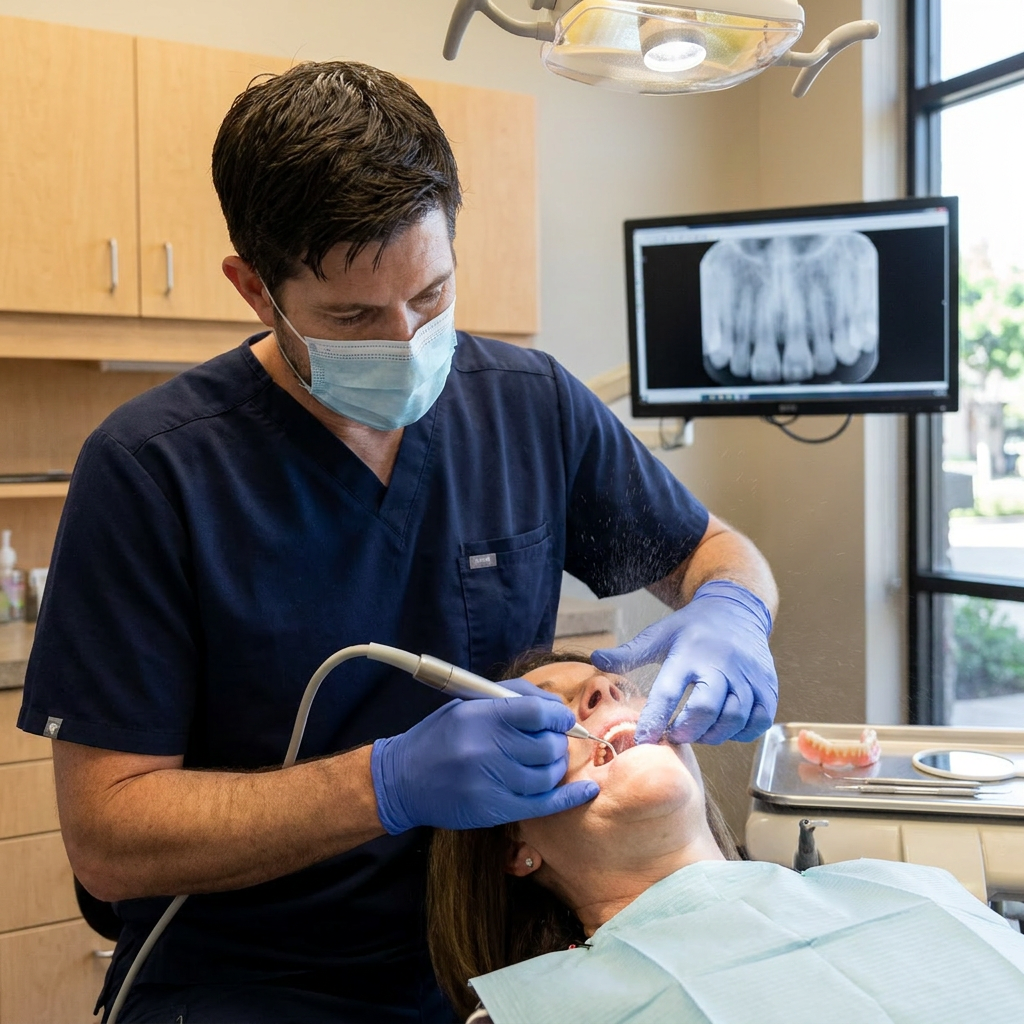
Older dentures had a reputation for slipping and looking obviously artificial. Today's versions are different. Digital scanning captures the exact contours of your gums and palate without the messy putty trays that used to be standard. That scan feeds into software that maps your bite alignment, so each tooth is positioned where it creates the most even chewing pressure.
The materials have improved just as much as the process. Injection-molded acrylic bases are denser and more resistant to warping than the poured acrylic used a generation ago, which means a tighter seal against your tissue. The teeth themselves are layered with multiple shades of composite resin to mimic the slight translucency of real enamel. Your dentist at Arrowhead Foothills Family Dentistry can also adjust the fit chairside in minutes if any spot feels like it rubs.
Why Our Patients Love Us
Real feedback from the families and neighbors we treat every week at our Glendale, AZ practice. These are the moments that remind Dr. Steele, Dr. Howard, and our whole team why we do this work.

-
-
-
-
-
Had a dental emergency and they got me in within a couple hours. They are full service so was able to make a crown while I waited. Had me in and out in 2 hours. So thankful did not have to go around with a cracked tooth. Highly recommend them

-
-
-
-
-
This practice is great. Everyone is so nice and professional. I decided to use them for my orthodontic journey. Andrea is my tech/dental assistant. She is so adorable and so patient. I’m proving to be a difficult case which means we get to see each other a lot!! I feel like I’m part of the AFD family. They are the best!
-
-
-
-
-
Highly recommend! Doctors and staff does an amazing job. Your in the best care here at Arrowhead foothills dentistry. Come and check it out, you will not be disappointed. Let's make Teeth great again!!
-
-
-
-
-
High quality dental care and services. Friendly and professional staff . Dr. Steele cares for his patients by being proactive for your future health. Been a patient here over 10 and will be long term.
Frequently Asked Questions
How long do dentures typically last before needing replacement?
Most dentures last five to eight years with proper care. Over time, your jawbone naturally changes shape, which affects how they fit. Your dentist will check the fit at regular visits and recommend a reline or new set when the current ones start feeling loose.
Will dentures affect the way I speak?
There is usually a short adjustment period of a few weeks. Reading out loud for 10 to 15 minutes a day helps your tongue adapt faster. Most patients speak naturally again within a month, and any initial lisping fades quickly as the muscles around your mouth adjust.
Can I eat steak and other firm foods with dentures?
Yes, once you are past the initial adjustment period. Start with softer foods cut into small pieces, then gradually add firmer items. Most patients return to eating things like grilled chicken and steak within a few weeks. Cutting food into smaller bites helps keep dentures stable.
How often should I visit the dentist after getting dentures?
Plan on a checkup at least once a year. Your dentist checks the fit, examines your gums and any remaining teeth, and screens for changes in your oral tissue. Bone and tissue shift over time, so regular visits catch fit issues before they cause sore spots or slipping.
Are dentures a good option if I still have some healthy teeth left?
Partial dentures are specifically made for that situation. They clip onto your remaining healthy teeth for support and fill in the gaps. Your dentist may also recommend dental crowns on certain anchor teeth to give the partial a stronger, more stable foundation.
Stay Informed with Expert Insights & Tips About Dentures
No Blog Posts Yet
We're working on new articles to help you care for your smile. Check back soon for updates from Arrowhead Foothills Family Dentistry
Connect {{i}}With Our Team{{/i}}
We're welcoming new patients and would love to see you. Whether it's a routine checkup or your very first visit, our team is here to help. Reach out online, give us a call, or stop by our Glendale office.
OFFICE HOURS
Monday – Wednesday: 7:00 AM – 5:00 PM
Thursday: 9:00 AM – 5:00 PM
Friday – Sunday: ClosedCONTACT
(602) 978-9794
DENTAL EMERGENCY?
We offer same-day emergency appointments to help you find relief fast. Call us immediately at (602) 978-9794

Thank you for booking your appointment!
We’ve received your request and will contact you soon to confirm the details. We look forward to seeing you at Arrowhead Foothills Family Dentistry!