

Back to Blogs

Your Top Oral Cancer Screening Questions Answered

Kristen's worry about a small spot leads to an oral cancer screening. Discover how proactive dental care answers key concerns and brings peace of mind.

July 3, 2026
•
2 min read
Woman at a kitchen counter checking her cheek and jaw in a compact mirror
Back to Blogs
Woman at a kitchen counter checking her cheek and jaw in a compact mirror

Your Top Oral Cancer Screening Questions Answered

Kristen's worry about a small spot leads to an oral cancer screening. Discover how proactive dental care answers key concerns and brings peace of mind.

July 3, 2026
•
2 min read

Kristen's Lingering Worry About a Tiny Spot

Kristen traced her tongue over the small, persistent white spot on the inside of her cheek. It had been there for a few weeks now, stubbornly refusing to disappear. Initially, she'd dismissed it as a simple canker sore or a bite, but the lack of pain and its unchanging nature had begun to stir a quiet anxiety. Her mother had once mentioned oral cancer in passing, a distant and frightening concept that now felt uncomfortably close.

She tried to push the thought away, telling herself it was probably nothing. Yet, every time she brushed her teeth or caught her reflection, that tiny white spot seemed to demand her attention. It was a subtle presence, easily overlooked, but for Kristen, it had become a source of growing uneasiness. She found herself subconsciously checking it multiple times a day.

Her annual dental check-up was still a few months away, and the idea of waiting felt excruciating. She wondered if she should call the office sooner, but then doubted herself. Was it even worth bothering Dr. Dallas Steele and his team over something so minor? This internal debate played out in her mind day after day, adding to her stress.
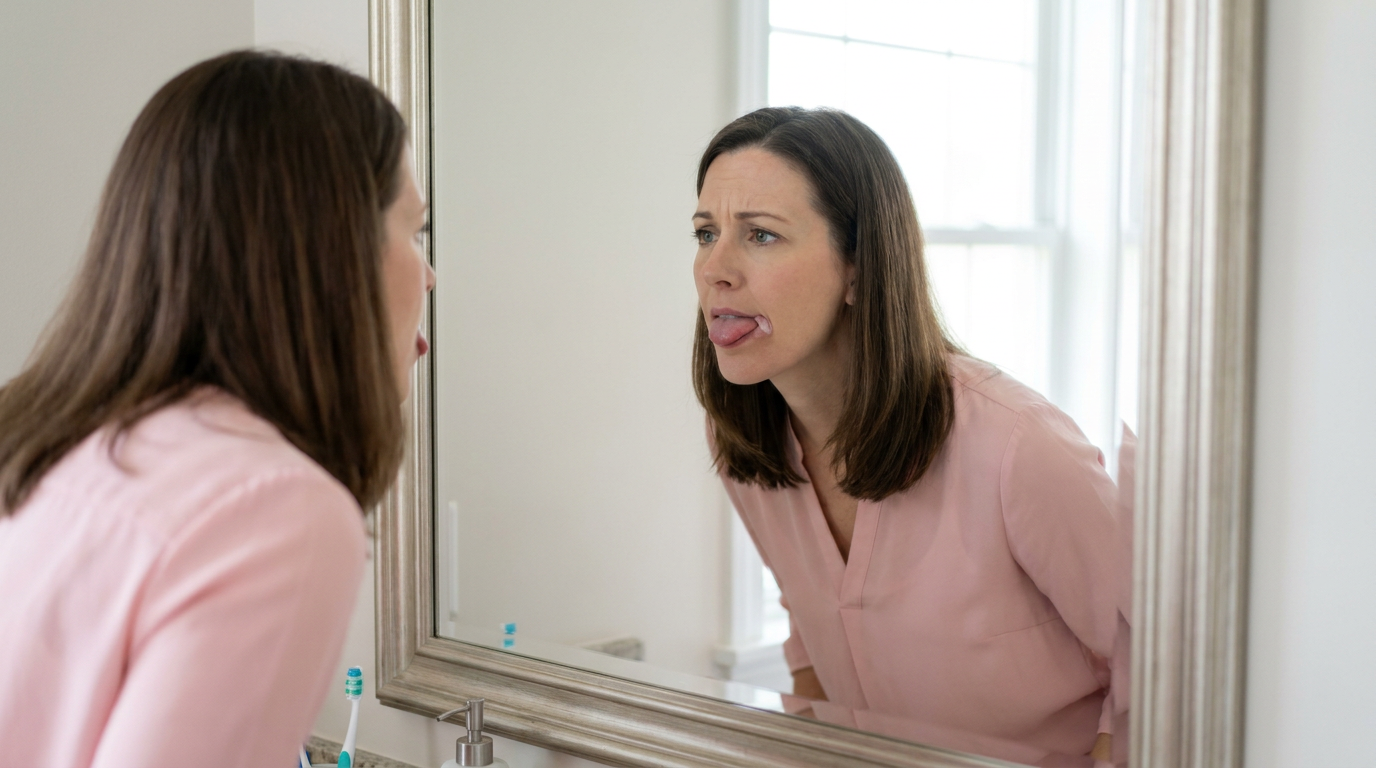
Woman sticking out her tongue to check a spot in the bathroom mirror

The Power of Proactive Dental Check-ups

Kristen finally confided in her friend, Heather, during their morning coffee routine. "It's probably nothing, but I have this little spot... and I can't stop thinking about oral cancer," she admitted, her voice low. Heather, always practical, immediately encouraged her. "Just call Dr. Steele's office. They do oral cancer screenings; it's part of preventative care."

Heather shared how her brother, Lucas, had a similar scare last year. Dr. Steele had performed a thorough examination, and while it turned out to be benign, the peace of mind was invaluable. Heather emphasized that these screenings are routine and quick, designed to catch potential issues early, which is absolutely crucial for any concerning symptoms.

Kristen felt a wave of relief just hearing her friend validate her concerns. It wasn't silly to be worried; it was responsible to investigate. The realization that oral cancer screening was a standard part of comprehensive dental care took a significant weight off her shoulders. She decided then and there to make the call.

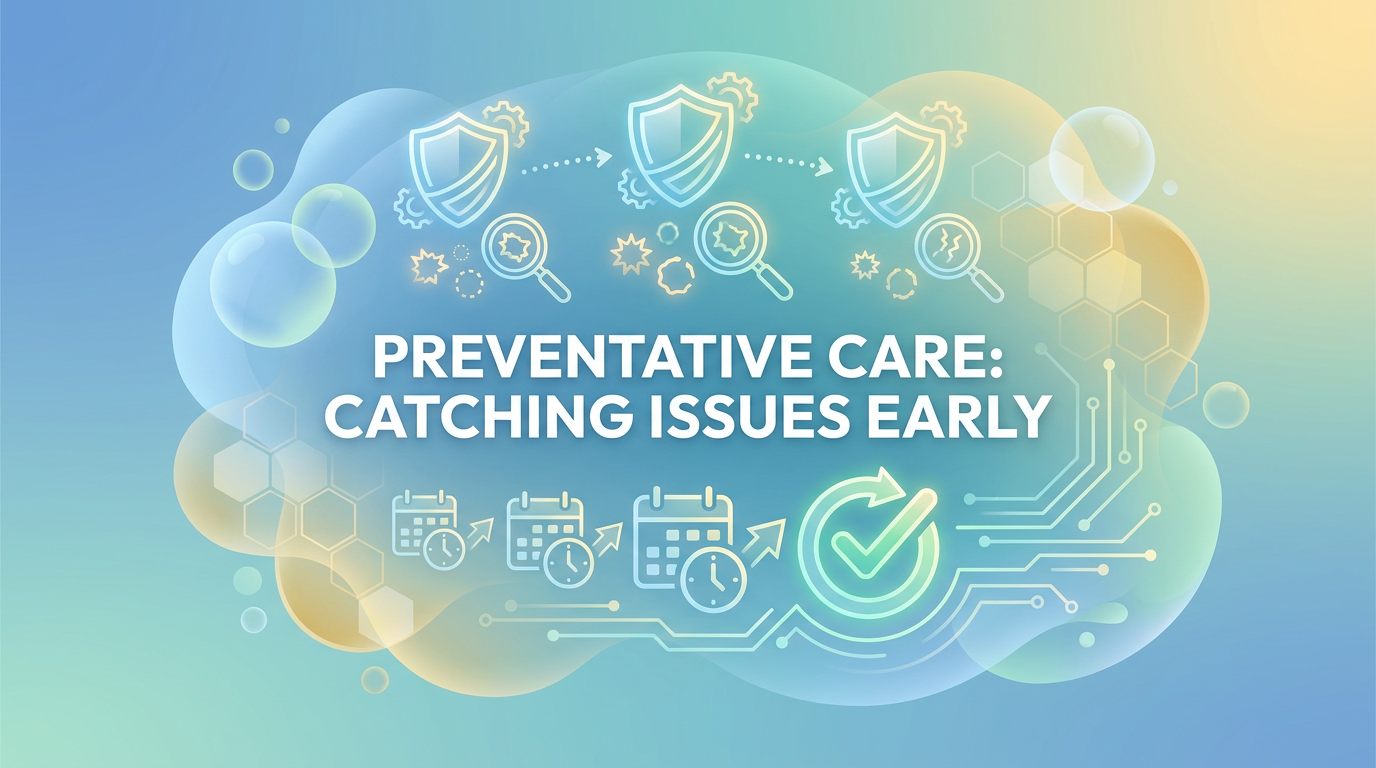
Graphic titled Preventative Care: Catching Issues Early, with shield, magnifier and calendar icons

Understanding What an Oral Cancer Screening Entails

Later that day, Kristen spoke with the friendly receptionist at Arrowhead Foothills Family Dentistry, explaining her concerns. They fit her in for an appointment the following week. She felt a mix of nerves and hopeful anticipation. What exactly would an oral cancer screening involve anyway? She imagined complicated machines or uncomfortable procedures.

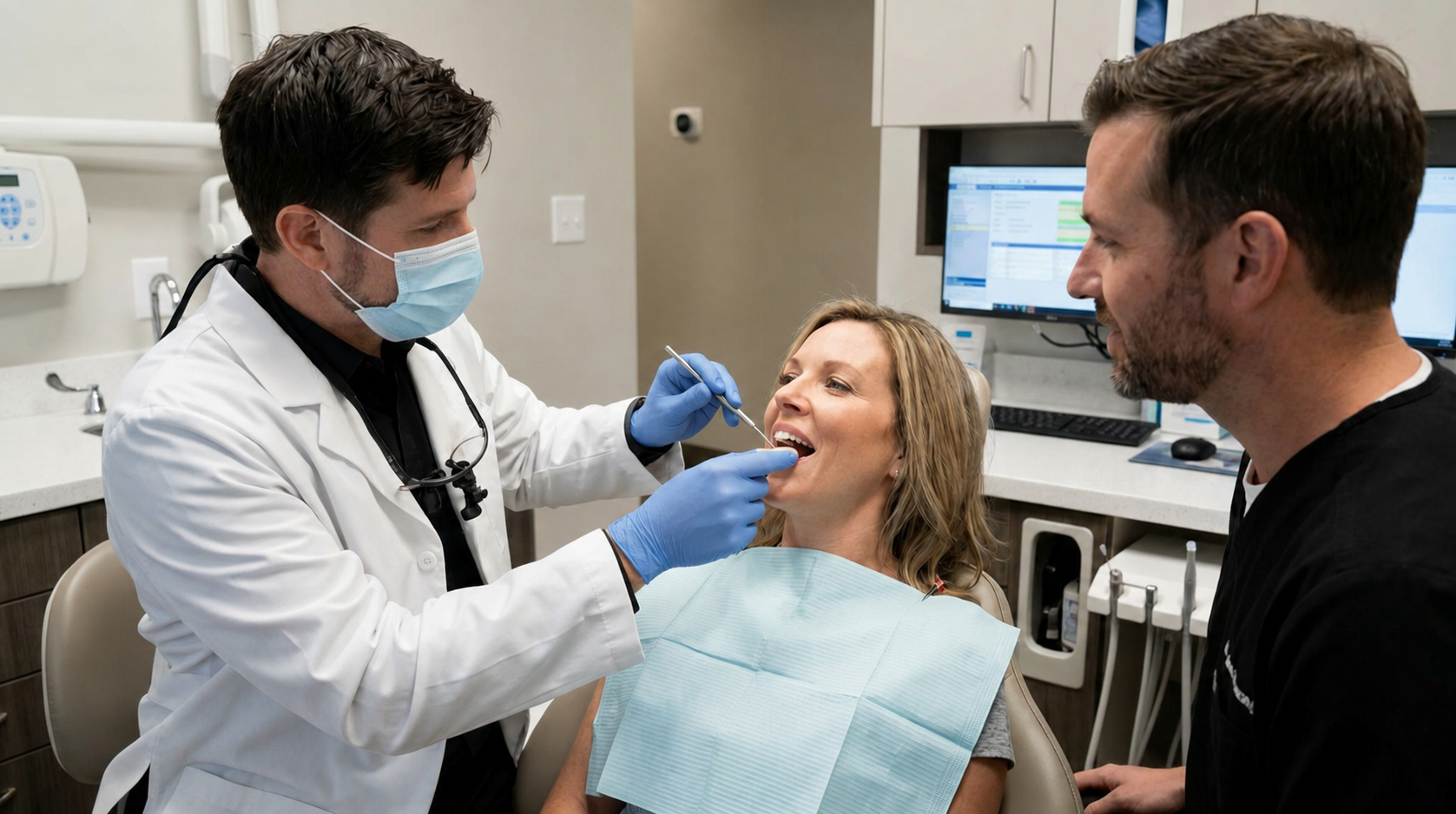
During her visit, Dr. Steele greeted her warmly. He listened patiently as Kristen pointed out the spot. He explained that an oral cancer screening is a thorough visual and physical examination of her entire mouth, including her lips, tongue, cheeks, floor of the mouth, hard and soft palates, and throat.

Dr. Steele gently felt her neck and jaw for any lumps or abnormalities. He used a small light and mirror to carefully inspect every area. He assured her it was a quick and painless process, designed to detect any unusual changes that might indicate a problem. Kristen was surprised by how straightforward it was.

Masked dentist examining a smiling patient's mouth while another man looks on

Examining the "Spot" and Other Warning Signs

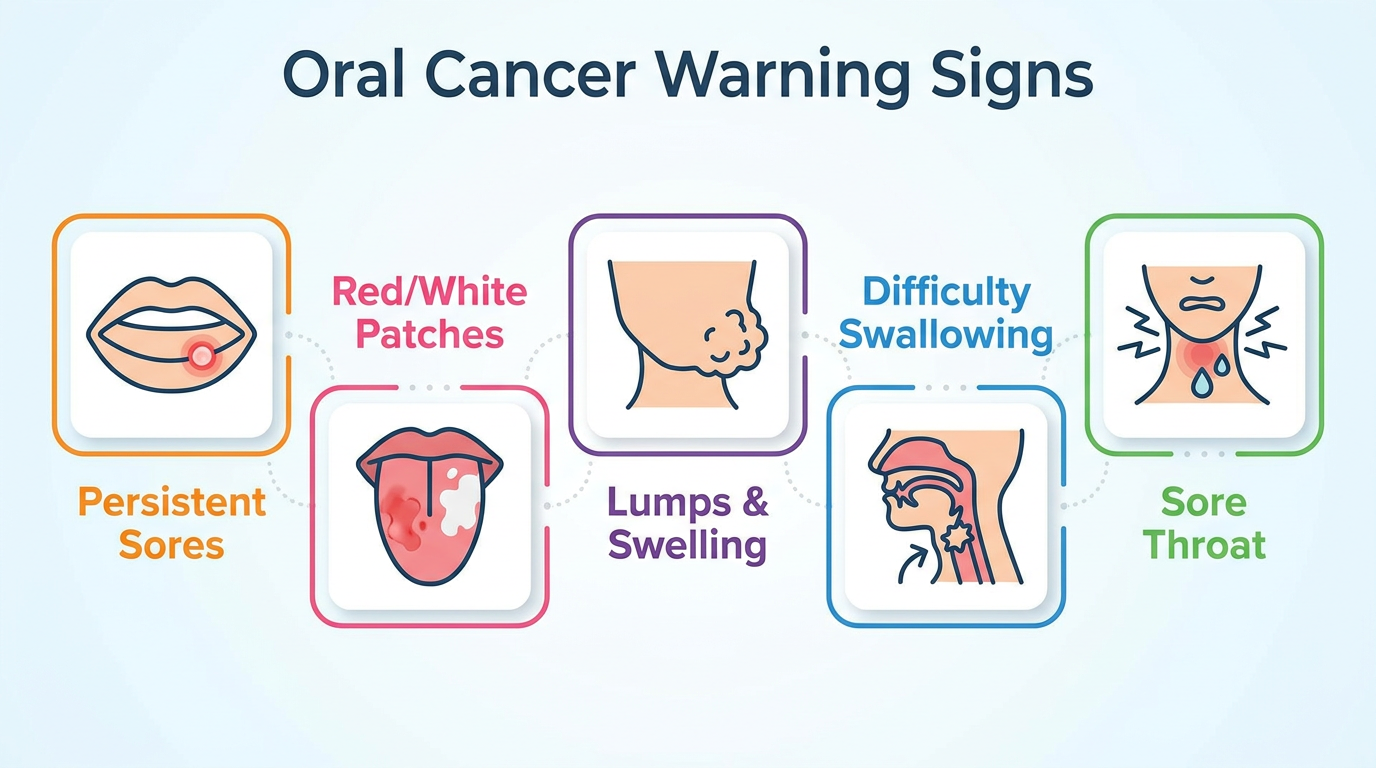
As Dr. Steele carefully examined Kristen's mouth, he explained some of the common warning signs of oral cancer. He mentioned persistent sores that don't heal, red or white patches like the one Kristen had, lumps or thickening of the skin lining the mouth, and difficulty chewing or swallowing.

He also checked for any persistent sore throats or hoarseness. Dr. Steele explained that early detection is paramount for successful treatment. He stressed that while many of these signs can be benign, it's always best to have them checked by a professional. Kristen appreciated his thoroughness and clear communication.

He gently palpated the spot on her cheek, noting its texture and size. "This is exactly why these screenings are so important," he told her, nodding reassuringly. Kristen felt a quiet calm begin to settle over her as she understood the purpose behind each step of his examination.

Oral cancer warning signs: sores, red or white patches, lumps, swallowing difficulty, sore throat

The Truth About Screening

Worries like Kristen's are common, and getting answers is often simpler than you imagine. If you find yourself concerned about a persistent spot or any unusual changes in your mouth, please don't hesitate. Our dedicated team is here to provide gentle, comprehensive care and address all your questions with clarity and compassion.

Arrowhead Foothill Family Dentistry office.

Demystifying the Role of Pain in Oral Lesions

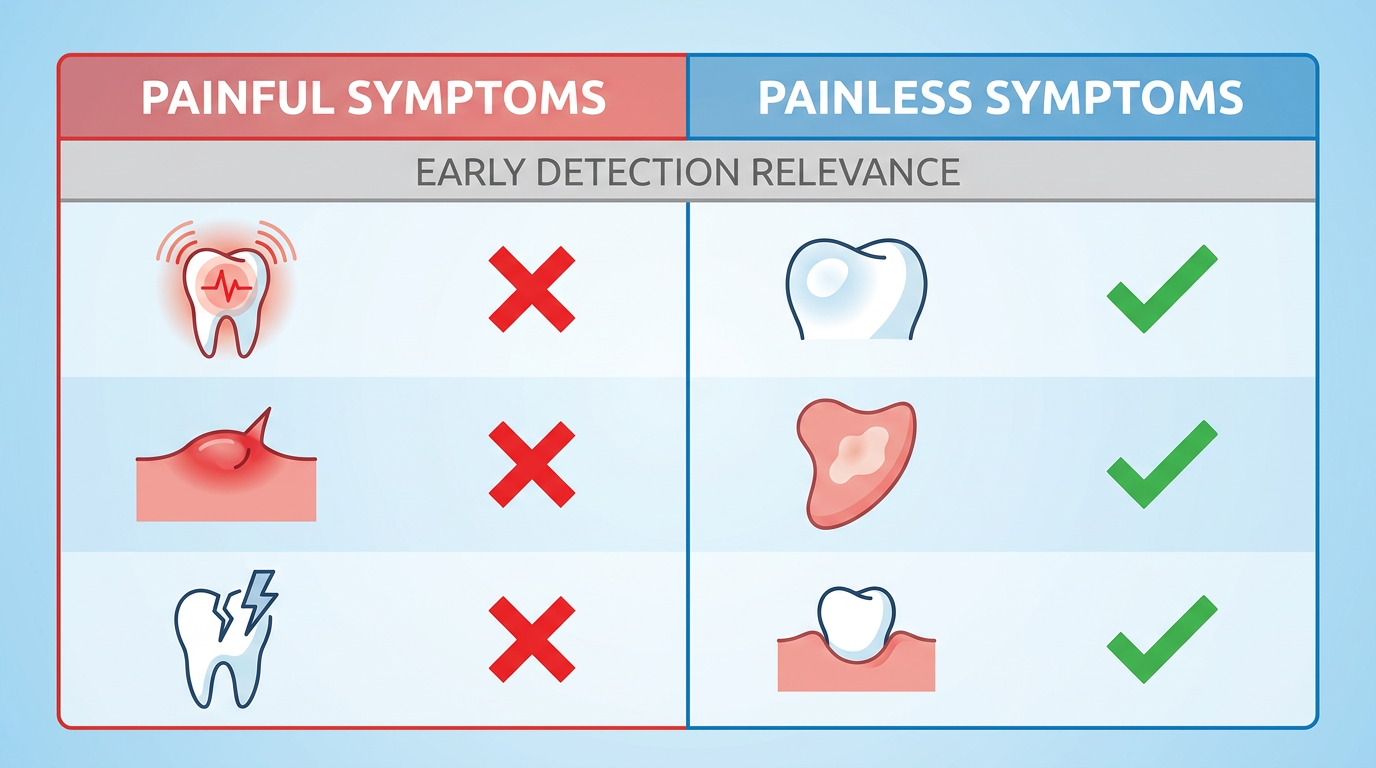
Kristen, still a little nervous, asked Dr. Steele, "But it doesn't hurt at all. Does that mean it's probably not cancer?" He explained that oral cancer often presents without pain in its early stages, which is precisely why regular screenings are so vital. Many people mistakenly believe pain is the primary indicator of a serious problem.

He elaborated that by the time pain becomes a significant symptom, the condition might be more advanced, making treatment potentially more complex. This was a striking realization for Kristen, who had been relying on the absence of pain to justify her delayed action. His explanation highlighted the deceptive nature of the disease.

Dr. Steele reiterated that any persistent change in the mouth, painful or not, warrants professional evaluation. He paused, making sure Kristen fully grasped this crucial point, emphasizing that it's always better to be safe and proactive about your oral health.

Chart comparing painful and painless oral symptoms, showing painless signs matter for early detection

Risk Factors and Prevention Strategies Explained

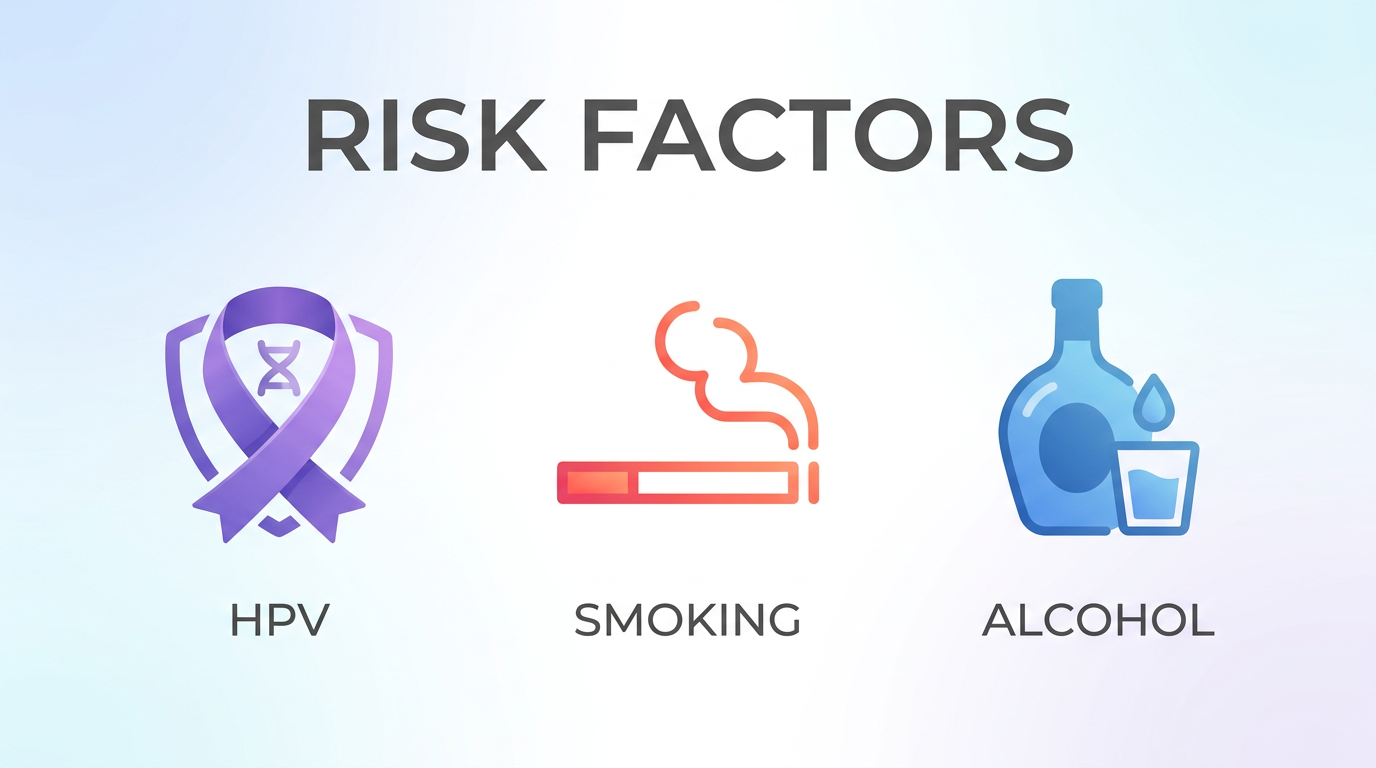
While looking at the spot, Dr. Steele also took the opportunity to discuss common risk factors for oral cancer. He mentioned smoking and excessive alcohol consumption as significant contributors. He highlighted that human papillomavirus (HPV) is also an increasingly recognized risk factor, particularly in younger demographics.

"While some risk factors are outside our control, others are choices we can make," he explained. He encouraged a healthy lifestyle, including a balanced diet rich in fruits and vegetables, and regular dental check-ups, which include annual oral cancer screenings. This preventative approach resonated with Kristen.

He emphasized that even if you don't have obvious risk factors, regular screenings are still important, as oral cancer can affect anyone. Kristen felt more empowered knowing that she could take proactive steps to protect her oral health beyond simply brushing and flossing.

Oral cancer risk factors graphic with icons for HPV, smoking and alcohol

Kristen's Relief and a Clear Path Forward

After a thorough examination, Dr. Steele gave Kristen the good news. "Based on my clinical examination, Kristen, this appears to be a benign irritation, likely due to something rubbing against it," he said gently. "However, we'll monitor it closely at your next cleaning." Kristen felt a profound sense of relief wash over her.

He advised her to keep an eye on it and call if it changed or grew. He reiterated that her decision to come in and get it checked was absolutely the right one, regardless of the outcome. That validation meant a lot to Kristen, easing her mind completely.

As she left the office, Kristen felt an immense gratitude for Dr. Steele and his team. She realized how crucial regular dental visits and thorough screenings are, not just for clean teeth, but for comprehensive health monitoring. The small white spot still existed, but its power to provoke anxiety had completely dissolved.

Smiling patient shaking hands with a dentist at the dental office front desk

Embracing Proactive Oral Health for Peace of Mind

Kristen shared her experience with her husband, Ryan, that evening. She recounted the relief she felt and the valuable information Dr. Steele had provided. Ryan acknowledged her apprehension and was glad she had taken action. "It really highlighted how much our dentists do for us beyond just fillings and cleanings," she remarked.

Her conversation with Dr. Steele reinforced the importance of not ignoring persistent oral changes and understanding the broader scope of preventive dental care. She now felt more informed and less anxious about her oral health, recognizing the critical role of regular check-ups.

Kristen resolved to be more diligent with her regular dental appointments and to encourage her friends, Jason and Tyler, to do the same. "It's about peace of mind," she told Ryan, "and that's priceless." Her small worry had turned into a significant lesson in proactive health management.

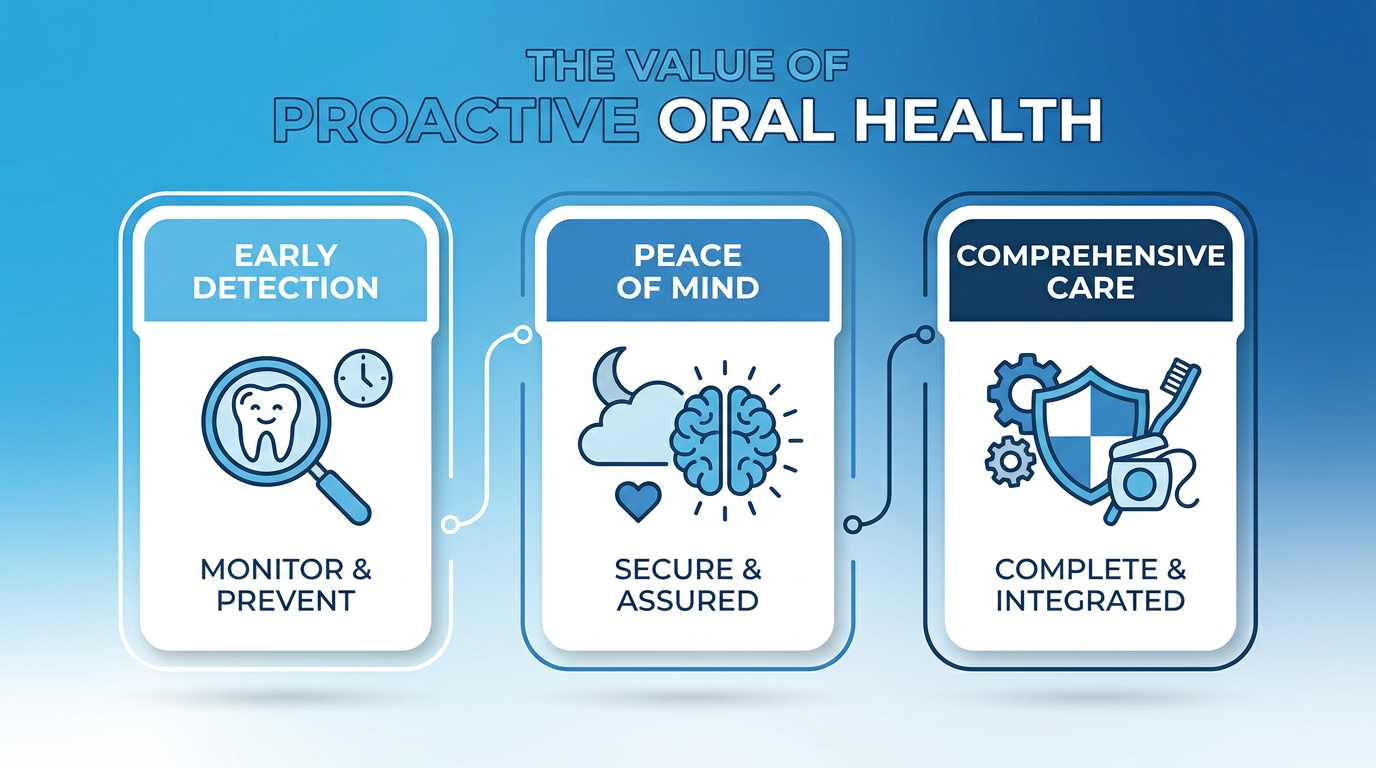
Graphic on proactive oral health: early detection, peace of mind and comprehensive care
Advice you can actually use

Dental Tips and Insights From Our Team

What Happens During a Dental Cleaning?

Discover what truly happens during a dental cleaning and why it's vital for preventing plaque, tartar, cavities, and gum disease.

July 3, 2026
Read More

Discovering Wellness Through Dental Exams & X-Rays

Uncover hidden issues with dental exams & x-rays. Rachel's journey shows how proactive care conquers worry and boosts oral health.

July 3, 2026
Read More

Frequently Asked Questions

1. What exactly is an oral cancer screening during a dental cleaning?
During a dental cleaning, an oral cancer screening involves a visual and physical examination of your entire mouth, including your lips, tongue, cheeks, and throat. Dr. Steele will look for any unusual red or white patches, sores that don't heal, or lumps and bumps. He'll also gently feel your neck and jaw for any swelling or abnormalities. It's a quick, non-invasive check specifically designed to catch potential issues early.

2. Does an oral cancer screening hurt?
No, an oral cancer screening is typically painless. Dr. Steele performs a gentle visual inspection and uses his fingers to feel for any unusual textures or lumps. You might feel a slight pressure during the physical examination, but it should not cause any discomfort.

3. How long does an oral cancer screening take?
The screening itself is very fast. It's usually integrated into your regular dental exam and cleaning appointment, adding only a few minutes to the overall process. It's a small investment of time for potentially significant health benefits.

4. Are oral cancer screenings covered by dental insurance?
Coverage for oral cancer screenings can vary depending on your specific dental insurance plan. Often, it's considered part of a routine comprehensive exam or preventative care, which most plans cover in full or in part. We recommend checking with your insurance provider directly to understand your specific benefits.

5. What happens if Dr. Steele finds something suspicious during a screening?
If Dr. Steele finds something unusual, he will discuss it with you. This doesn't necessarily mean it's cancer. It could be an irritation or a benign lesion. He might recommend observing the area, or if necessary, he may suggest further diagnostic steps, such as a biopsy, or refer you to a specialist. His priority is making sure you get the appropriate follow-up care for definitive answers.

6. Can I get an oral cancer screening even if I don't have any symptoms?
Absolutely! In fact, most oral cancer screenings are performed on patients who don't have any obvious symptoms. This is because early signs of oral cancer can be subtle and often painless. Regular screenings are a crucial part of preventative dental care, greatly increasing the chances of early detection and successful treatment.

Connect {{i}}With Our Team{{/i}}

We're welcoming new patients and would love to see you. Whether it's a routine checkup or your very first visit, our team is here to help. Reach out online, give us a call, or stop by our Glendale office.

DENTAL EMERGENCY?

We offer same-day emergency appointments to help you find relief fast. Call us immediately at (602) 978-9794

Book Appointment

Thank you for booking your appointment!

We’ve received your request and will contact you soon to confirm the details. We look forward to seeing you at Arrowhead Foothills Family Dentistry!

Oops! Something went wrong while submitting the form.