

Exams & X-rays in Glendale, AZ
Routine exams and digital x-rays catch small problems early so your teeth and gums stay healthy long-term.
What Are Exams & X-rays?
Small problems in your mouth rarely announce themselves. A hairline crack, a cavity forming between two teeth, early bone loss around a root. Exams & x-rays catch these issues while they're still simple to treat, often before you feel a thing. Your dentist checks your gums, jaw joints, bite alignment, and every tooth surface during a thorough clinical exam, then uses x-rays to see what's hidden below the gumline.
At Arrowhead Foothills Family Dentistry in Glendale, AZ, these visits also include an oral cancer screening and a close look at any existing dental work. If something needs attention, your dentist can outline next steps on the spot. Routine exams & x-rays are the single best way to keep a minor issue from turning into something that requires more involved treatment.
Benefits of Exams & X-rays
Regular exams and x-rays give your dentist the full picture, so small issues stay small and your treatment stays simple.

Problems Found While Tiny
X-rays reveal decay between teeth, bone changes, and hidden infections long before you would feel a thing. Catching these early often means a smaller fix overall.

A Clear Baseline For You
Your first set of exams and x-rays creates a detailed record your dentist checks at every future visit, making even small changes easy to spot as time goes on.

Keep Your Smile on Track
Skipping exams is how a tiny cavity quietly turns into something bigger. Staying current with checkups keeps your treatment plan predictable and manageable.
Who Should Get Exams & X-rays?
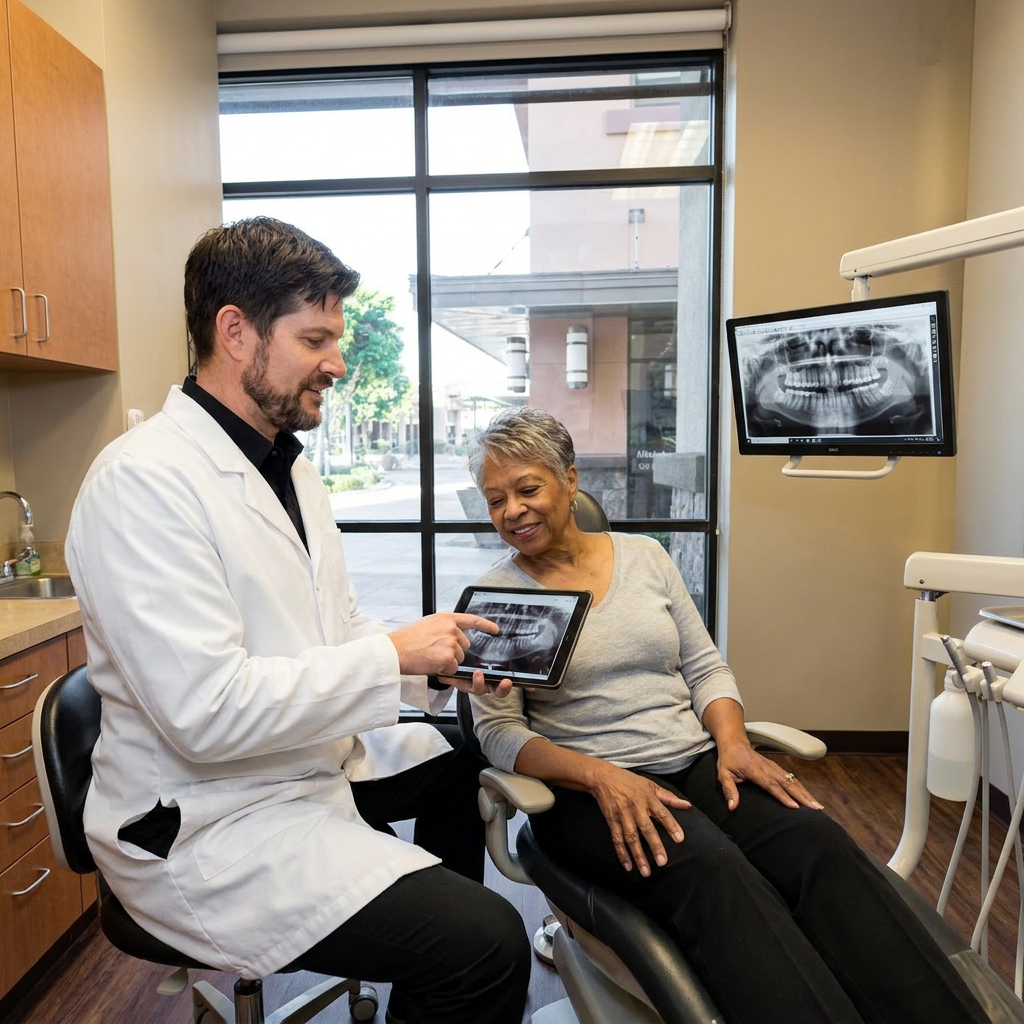
If it has been more than six months since your last dental visit, you are already due. Regular exams and x-rays catch small problems, like early decay or bone loss, before they turn into something that needs more involved treatment. Children should start visits by age one, and adults benefit from consistent checkups no matter how healthy their teeth feel. Pain-free does not always mean problem-free.
People who notice bleeding gums, sensitivity to hot or cold, or a dull ache that comes and goes should schedule exams and x-rays sooner rather than later. The same goes for anyone with older dental work that may be wearing down. At Arrowhead Foothills Family Dentistry in Glendale, AZ, your dentist uses digital imaging to spot concerns that a visual check alone can miss, keeping your care on track year after year.
What to Expect During Your Visit
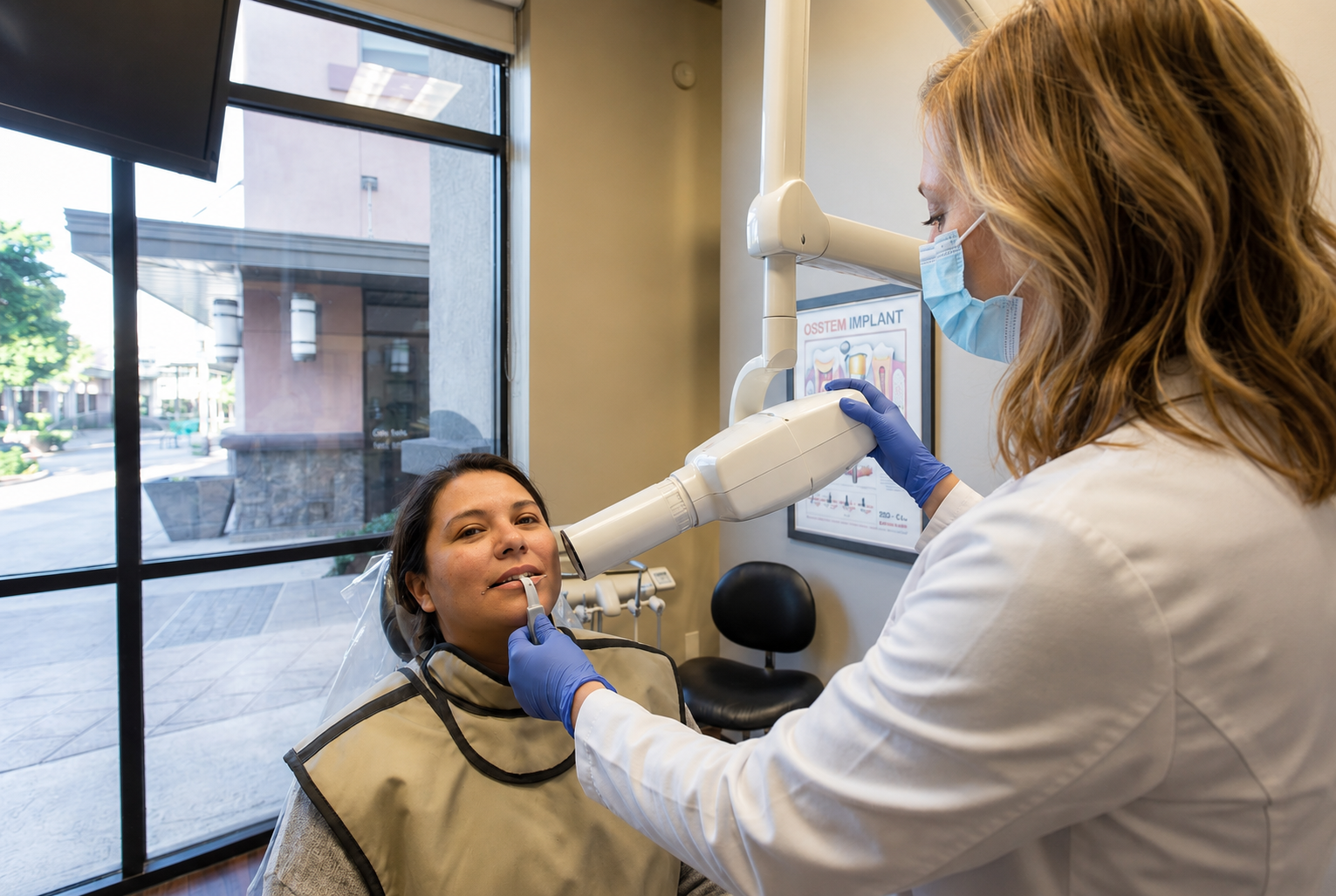
Your appointment starts with a quick conversation about any concerns or changes in your mouth since your last visit. The dental team then takes digital x-rays, which feel like holding a small sensor between your teeth for a few seconds. After that, your dentist does a thorough visual exam of each tooth, your gums, and the soft tissue inside your mouth. The whole process usually wraps up in about 30 to 45 minutes.
There's no recovery needed after exams and x-rays, so you can eat, drink, and go right back to your day. If the x-rays reveal anything that needs attention, your dentist will walk you through the findings and talk through next steps before you leave the chair.

Before Your Appointment
- 01
Write down any specific tooth pain, sensitivity, or changes you've noticed so your dentist knows exactly where to focus the exam.
- 02
Bring a list of current medications and supplements, since some can affect how your x-rays are interpreted or what shows up on them.
- 03
Skip whitening toothpaste for two days before your visit so your dentist gets an accurate look at your natural enamel during the exam.
After Your Appointment
- 01
Review the printed summary your dentist provides, noting any areas flagged on your x-rays so you can track them at your next visit.
- 02
Hold off on eating or drinking for about 30 minutes if fluoride was applied during your exam, so the treatment absorbs fully.
- 03
Keep a copy of your x-ray results in your own records, especially if you travel or ever need to share them with another provider.
Advanced Exam & X-ray Technology
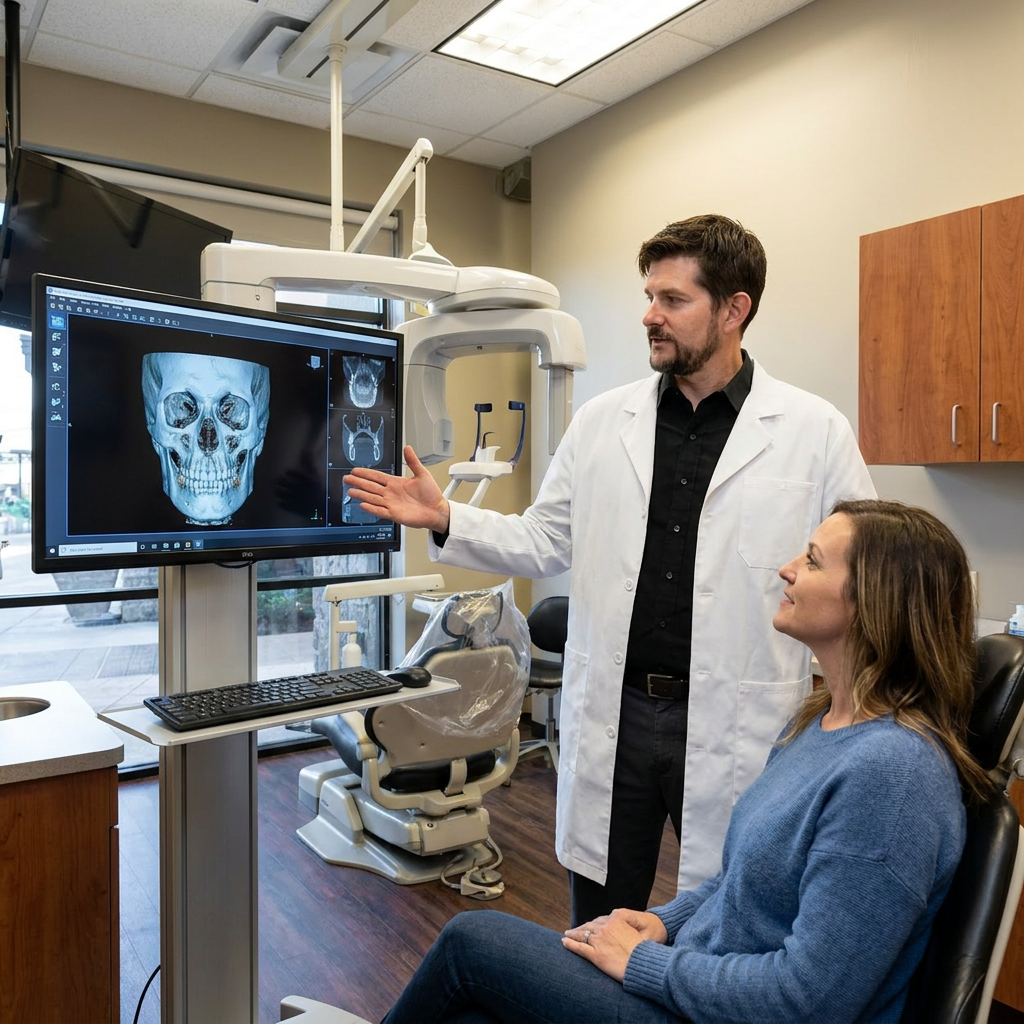
Digital x-rays have replaced the old film-based versions that took minutes to develop in a darkroom. A small sensor sits comfortably inside your mouth, captures the image in under a second, and displays it on a chairside monitor almost instantly. The radiation exposure is roughly 80 percent lower than traditional film, and the image quality is sharper, so your dentist can zoom in on a suspicious spot without guessing.
Intraoral cameras add another layer of detail. A pen-sized camera takes high-resolution photos of individual teeth and gum tissue, letting you see exactly what your dentist sees. That kind of visual clarity makes it easier to understand a diagnosis and weigh your options. The team at Arrowhead Foothills Family Dentistry pairs these tools during every set of exams & x-rays to build a complete, accurate picture of your oral health.
Why Our Patients Love Us
Real feedback from the families and neighbors we treat every week at our Glendale, AZ practice. These are the moments that remind Dr. Steele, Dr. Howard, and our whole team why we do this work.

-
-
-
-
-
Had a dental emergency and they got me in within a couple hours. They are full service so was able to make a crown while I waited. Had me in and out in 2 hours. So thankful did not have to go around with a cracked tooth. Highly recommend them

-
-
-
-
-
This practice is great. Everyone is so nice and professional. I decided to use them for my orthodontic journey. Andrea is my tech/dental assistant. She is so adorable and so patient. I’m proving to be a difficult case which means we get to see each other a lot!! I feel like I’m part of the AFD family. They are the best!
-
-
-
-
-
Highly recommend! Doctors and staff does an amazing job. Your in the best care here at Arrowhead foothills dentistry. Come and check it out, you will not be disappointed. Let's make Teeth great again!!
-
-
-
-
-
High quality dental care and services. Friendly and professional staff . Dr. Steele cares for his patients by being proactive for your future health. Been a patient here over 10 and will be long term.
Frequently Asked Questions
How often should I get dental exams and x-rays?
Most adults do well with exams and x-rays every six months. Your dentist may adjust that schedule based on your gum health, cavity history, or other risk factors. Some patients only need a full set of x-rays every three to five years.
Are dental x-rays safe during pregnancy?
Yes. Modern digital x-rays use very low radiation, and a lead apron with a thyroid collar adds extra protection. Most dentists in Glendale, AZ will take x-rays during pregnancy if there is a clinical need, though elective imaging is usually postponed until after delivery.
Can exams and x-rays detect problems I can't feel yet?
Absolutely. x-rays reveal decay between teeth, bone loss, and infections around tooth roots well before you notice any pain. Catching these issues early often means simpler treatment and less time in the chair down the road.
Do children need dental x-rays as often as adults?
It depends on the child. Kids with a history of cavities or crowded teeth may need x-rays every six to twelve months so the dentist can track development. Lower-risk children can often go longer between imaging. Your dentist will recommend a schedule based on what they see clinically.
What is the difference between digital x-rays and traditional film x-rays?
Digital x-rays produce an image in seconds and use up to 80% less radiation than traditional film. The image appears on a screen right away, so your dentist can zoom in on details and walk you through findings during the same visit. Most modern practices have switched to digital entirely.
Stay Informed with Expert Insights & Tips About Exams & X-rays

Discovering Wellness Through Dental Exams & X-Rays
Uncover hidden issues with dental exams & x-rays. Rachel's journey shows how proactive care conquers worry and boosts oral health.
Connect {{i}}With Our Team{{/i}}
We're welcoming new patients and would love to see you. Whether it's a routine checkup or your very first visit, our team is here to help. Reach out online, give us a call, or stop by our Glendale office.
OFFICE HOURS
Monday – Wednesday: 7:00 AM – 5:00 PM
Thursday: 9:00 AM – 5:00 PM
Friday – Sunday: ClosedCONTACT
(602) 978-9794
DENTAL EMERGENCY?
We offer same-day emergency appointments to help you find relief fast. Call us immediately at (602) 978-9794

Thank you for booking your appointment!
We’ve received your request and will contact you soon to confirm the details. We look forward to seeing you at Arrowhead Foothills Family Dentistry!