

Sleep Apnea Treatment in Glendale, AZ
Treat sleep apnea with a custom oral appliance that keeps your airway open for deeper, more restful sleep.
What Is Sleep Apnea Treatment?
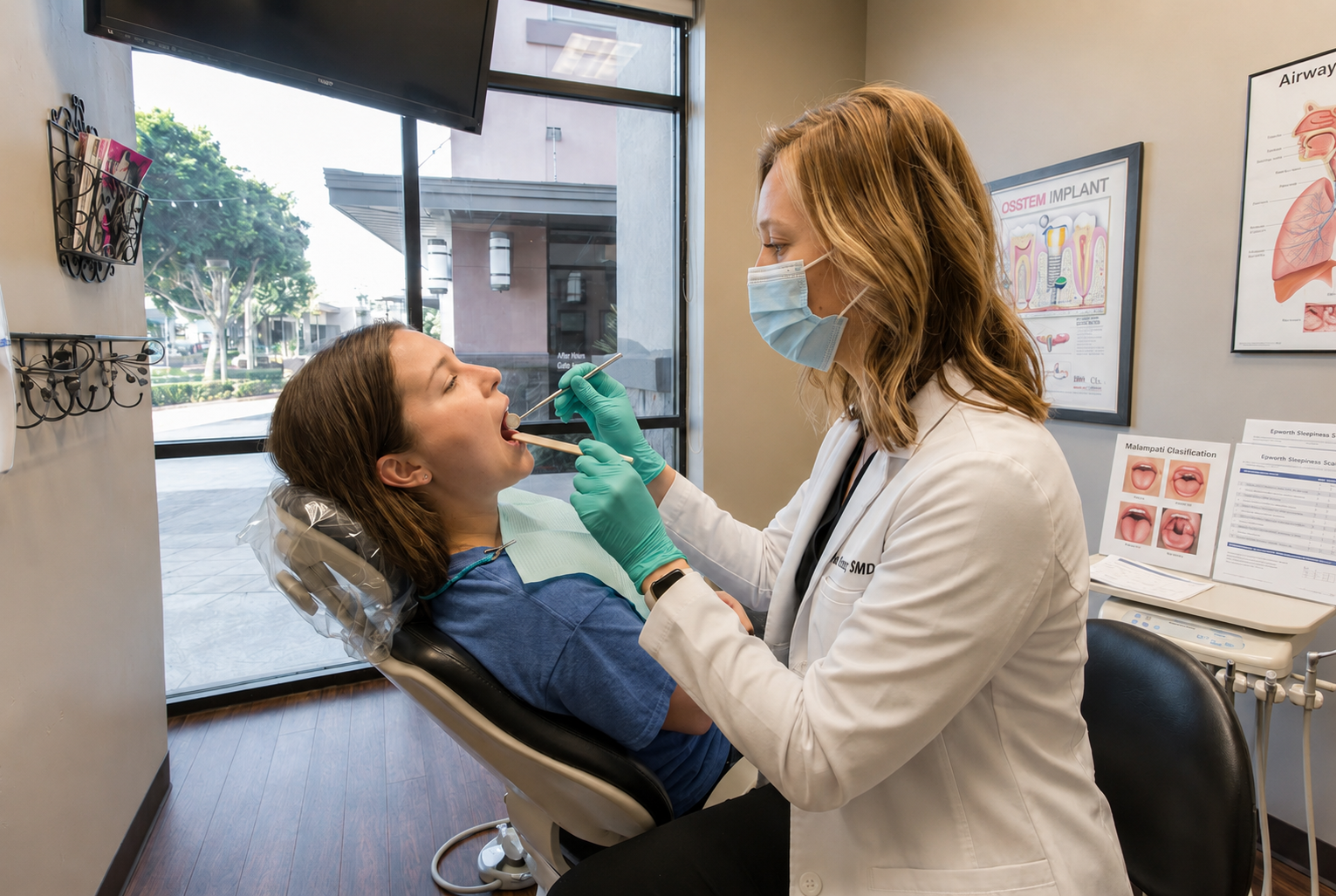
Sleep apnea treatment addresses the repeated pauses in breathing that fragment your sleep and leave you exhausted during the day. If you snore loudly, wake up with headaches, or feel drained no matter how many hours you spend in bed, your dentist can screen for obstructive sleep apnea during routine exams & x-rays and help determine the right path forward.
For many patients, a custom oral appliance is all it takes. The device repositions your lower jaw slightly forward while you sleep, keeping your airway open without the noise or bulk of a CPAP machine. It fits like a sports mouthguard, travels easily, and most people adjust to it within a few nights. The team at Arrowhead Foothills Family Dentistry works closely with your physician to confirm the diagnosis and track your progress over time.
Benefits of Sleep Apnea Treatment
Sleep apnea treatment does more than quiet your snoring. It changes how you feel during every waking hour.

Wake Up Feeling Rested
When your airway stays open through the night, your body finally gets the deep sleep it needs. Most patients notice more energy within the first few weeks of treatment.
Small Device Not A Mask
Your dentist can fit you with a custom oral appliance that gently shifts your lower jaw forward while you sleep. It is about the size of a mouthguard and easy to travel with.
Less Strain On Your Heart
Untreated sleep apnea forces your heart to work harder every single night. Treating it eases that nightly strain and supports your long term health in a real, lasting way.
Could Sleep Apnea Treatment Help You?

If your partner has mentioned loud snoring, or you wake up gasping in the middle of the night, those are signs worth paying attention to. Sleep apnea treatment is most often needed by adults who stop breathing repeatedly during sleep, sometimes dozens of times per hour. You might not remember waking up, but the exhaustion follows you all day. Headaches every morning, trouble concentrating at work, and irritability that won't quit are common red flags.
The condition affects people of all ages, though it shows up more often in adults over 40 and those who carry extra weight around the neck and jaw. Jaw structure plays a role too, and patients already managing TMJ treatment sometimes discover overlapping airway issues. Your dentist at Arrowhead Foothills Family Dentistry can screen for sleep apnea during routine exams & x-rays and recommend the right next step based on your specific situation.
What to Expect During Your Visit
Sleep apnea treatment at Arrowhead Foothills Family Dentistry starts with a thorough evaluation of your airway, bite, and jaw position. Your dentist takes digital impressions of your teeth, which takes about 30 minutes and feels similar to biting into a soft mold. These impressions are used to create a custom oral appliance that gently repositions your lower jaw while you sleep.
Once your appliance is ready, usually within two weeks, you'll come back for a fitting appointment. Your dentist adjusts the device until it sits comfortably and checks your bite. Most patients adjust to wearing it within a few nights. A follow-up visit about four to six weeks later lets the team fine-tune the fit based on how you're sleeping.

Before Your Appointment
- 01
Write down how often you snore, wake up gasping, or feel exhausted during the day so your dentist can gauge severity.
- 02
Bring any prior sleep study results or a list of medications you currently take for sleep-related issues.
- 03
Skip caffeine after noon the day before your appointment so your baseline alertness is easier to evaluate during the exam.
After Your Appointment
- 01
Wear your oral appliance every single night, even if you feel fine. Consistent use is what keeps your airway open during sleep.
- 02
Clean your appliance each morning with a soft brush and cool water. Hot water can warp the fit and reduce how well it holds position.
- 03
Keep your follow-up visit so your dentist can check the fit and adjust the appliance based on how your symptoms are responding.
Advanced Sleep Apnea Treatment Technology
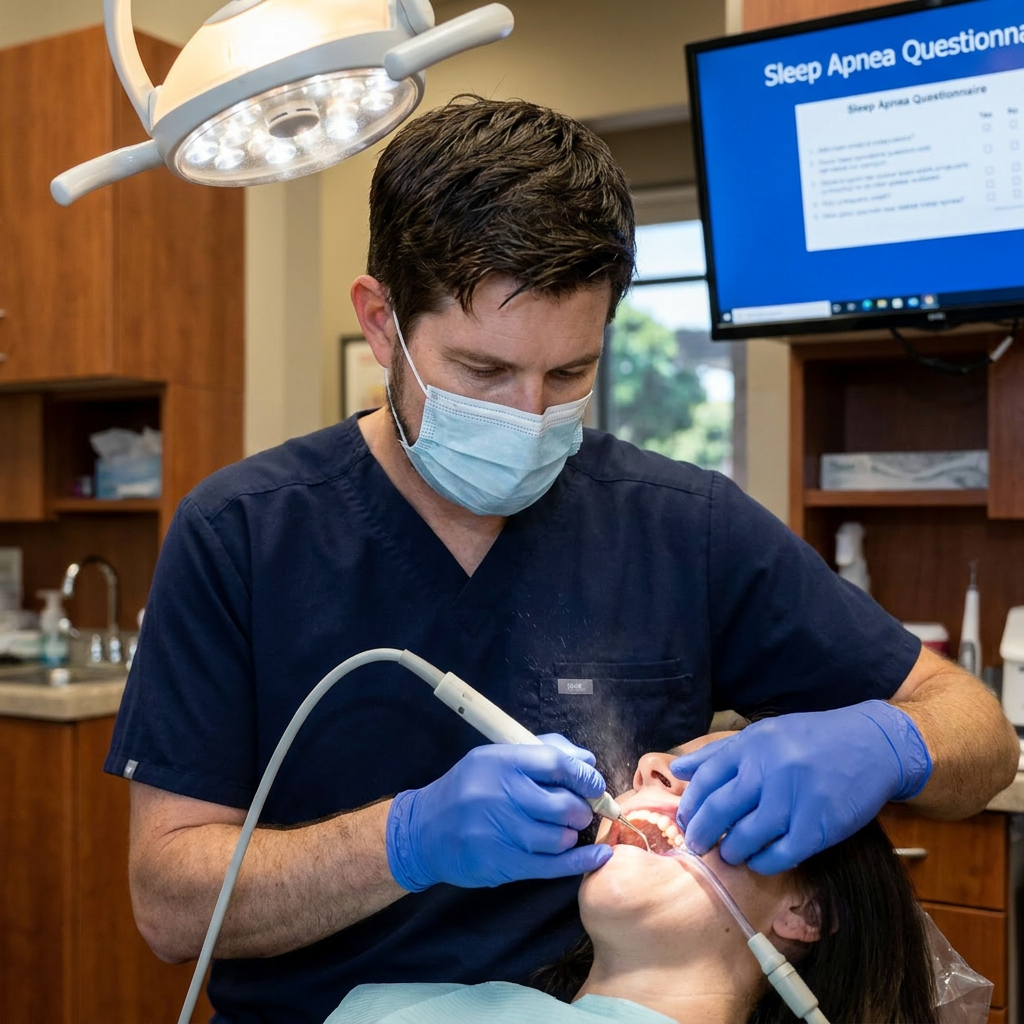
Digital jaw tracking now lets your dentist measure exactly how far your lower jaw needs to move to keep the airway clear. Older appliances relied on manual adjustments and guesswork, but today's calibrated devices use micro-turn mechanisms that shift the jaw in increments as small as 0.25 millimeters. That precision means better airflow with less strain on your jaw joints.
At Arrowhead Foothills Family Dentistry in Glendale, AZ, intraoral scanners capture a detailed 3D map of your teeth and bite in minutes. The scan feeds directly into the lab's milling software, so your appliance fits snugly from the first night. Patients who also deal with jaw tension or clicking often find that sleep apnea treatment and TMJ treatment overlap, since both conditions involve how the jaw sits at rest.
Why Our Patients Love Us
Real feedback from the families and neighbors we treat every week at our Glendale, AZ practice. These are the moments that remind Dr. Steele, Dr. Howard, and our whole team why we do this work.

-
-
-
-
-
Had a dental emergency and they got me in within a couple hours. They are full service so was able to make a crown while I waited. Had me in and out in 2 hours. So thankful did not have to go around with a cracked tooth. Highly recommend them

-
-
-
-
-
This practice is great. Everyone is so nice and professional. I decided to use them for my orthodontic journey. Andrea is my tech/dental assistant. She is so adorable and so patient. I’m proving to be a difficult case which means we get to see each other a lot!! I feel like I’m part of the AFD family. They are the best!
-
-
-
-
-
Highly recommend! Doctors and staff does an amazing job. Your in the best care here at Arrowhead foothills dentistry. Come and check it out, you will not be disappointed. Let's make Teeth great again!!
-
-
-
-
-
High quality dental care and services. Friendly and professional staff . Dr. Steele cares for his patients by being proactive for your future health. Been a patient here over 10 and will be long term.
Frequently Asked Questions
How long does a dental sleep apnea treatment appliance last?
Most oral appliances last about three to five years with regular use. Your dentist will check the fit at routine visits and let you know when the material starts to wear down or the device needs replacing.
Can sleep apnea treatment with an oral appliance replace a CPAP machine?
For mild to moderate obstructive sleep apnea, an oral appliance often works just as well as a CPAP. Patients with severe cases may still need CPAP therapy, though some use both together to lower the pressure setting.
Will wearing a sleep apnea appliance change my bite over time?
Minor bite changes can happen after months of nightly use. Your dentist monitors your jaw alignment at follow-up visits and can adjust the appliance or recommend simple exercises to keep your bite stable.
Is sleep apnea treatment safe if I have TMJ problems?
It can be. Your dentist evaluates your jaw joints before fitting any appliance. Some patients with TMJ treatment needs actually find that a properly adjusted oral appliance reduces jaw tension during sleep.
How often do I need follow-up visits for sleep apnea treatment in Glendale, AZ?
You'll typically return two to three times in the first few months so your dentist can fine-tune the fit. After that, a check once or twice a year during your regular exams & x-rays is usually enough to keep things on track.
Stay Informed with Expert Insights & Tips About Sleep Apnea Treatment
No Blog Posts Yet
We're working on new articles to help you care for your smile. Check back soon for updates from Arrowhead Foothills Family Dentistry
Connect {{i}}With Our Team{{/i}}
We're welcoming new patients and would love to see you. Whether it's a routine checkup or your very first visit, our team is here to help. Reach out online, give us a call, or stop by our Glendale office.
OFFICE HOURS
Monday – Wednesday: 7:00 AM – 5:00 PM
Thursday: 9:00 AM – 5:00 PM
Friday – Sunday: ClosedCONTACT
(602) 978-9794
DENTAL EMERGENCY?
We offer same-day emergency appointments to help you find relief fast. Call us immediately at (602) 978-9794

Thank you for booking your appointment!
We’ve received your request and will contact you soon to confirm the details. We look forward to seeing you at Arrowhead Foothills Family Dentistry!