

Gum Disease in Glendale, AZ
Treat gum disease early to stop tissue damage, reduce inflammation, and keep your teeth firmly in place.
What Is Gum Disease?
Gum disease starts quietly. You might notice a little blood when you brush, or your gums might look redder and puffier than usual. These early signs point to gingivitis, a mild inflammation caused by bacterial buildup along the gumline. Left alone, it can progress into periodontitis, where the infection spreads below the surface and begins breaking down the bone that holds your teeth in place.
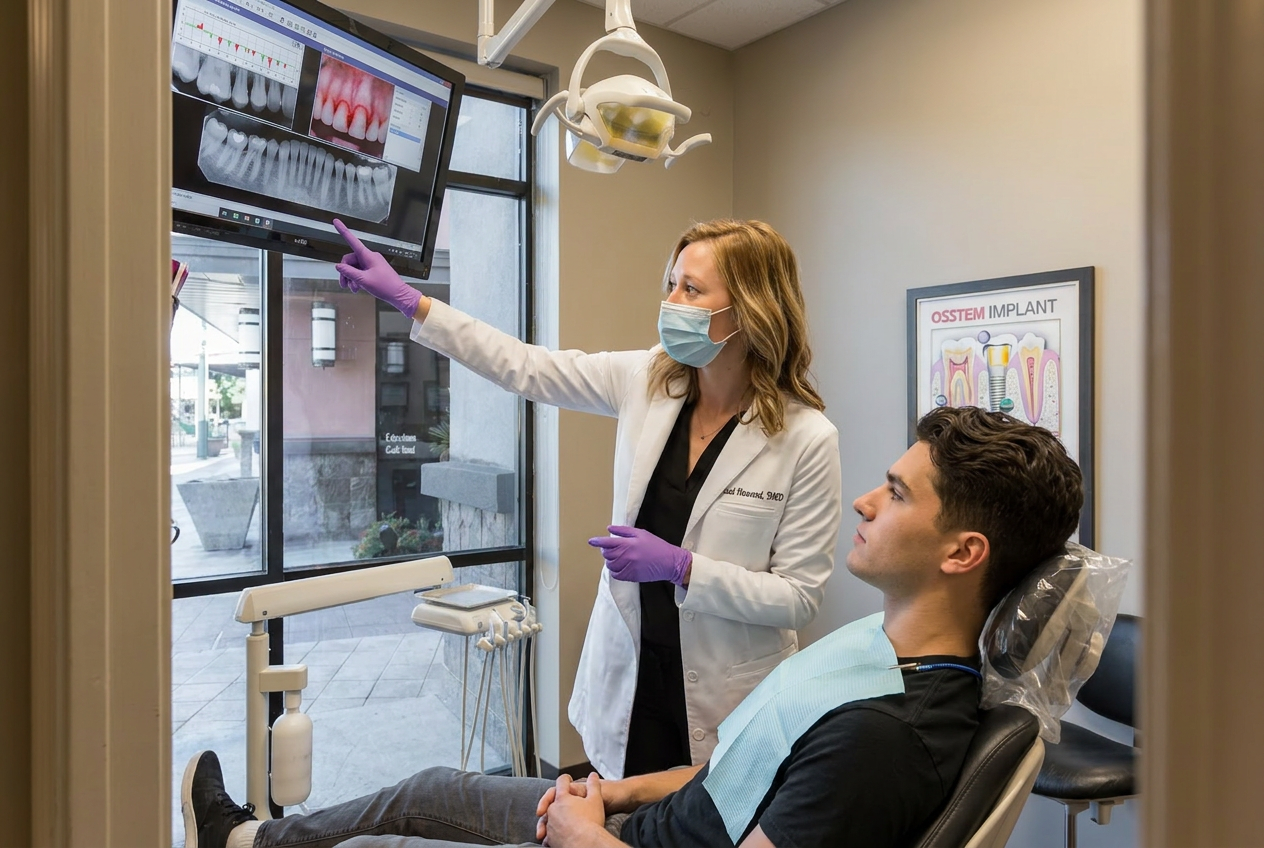
Catching gum disease early makes treatment simpler and more predictable. Routine dental cleanings remove the hardened plaque your toothbrush can't reach, and your dentist can spot trouble during exams & x-rays before you feel any symptoms. When gum disease does advance, targeted periodontal treatment can stop the damage and give your tissue a real chance to heal.
Benefits of Gum Disease Treatment
Treating gum disease early does more than stop bleeding gums. It protects the bone and tissue that keep your teeth stable for life.

Save Your Natural Teeth
Gum disease is a leading cause of adult tooth loss. Catching it early preserves the bone that anchors each tooth, so you are far less likely to need implants or dentures.
Gums That Stop Bleeding
Healthy gum tissue sits tight against each tooth and does not bleed when you brush. After treatment, most patients notice the soreness and puffiness fade within weeks.

Fresher Breath That Lasts
Persistent bad breath often traces back to bacteria hiding deep in gum pockets. Removing that buildup at the source gives you fresher breath, not just a temporary mask.
Signs You Shouldn't Ignore
Bleeding when you brush or floss is often the first clue. You might notice it on your toothbrush or taste something metallic after flossing. That bleeding signals gum disease in its earliest stage, and it affects nearly half of adults over 30. Swollen, tender gums that pull away from your teeth are another red flag. So is persistent bad breath that mouthwash can't fix.
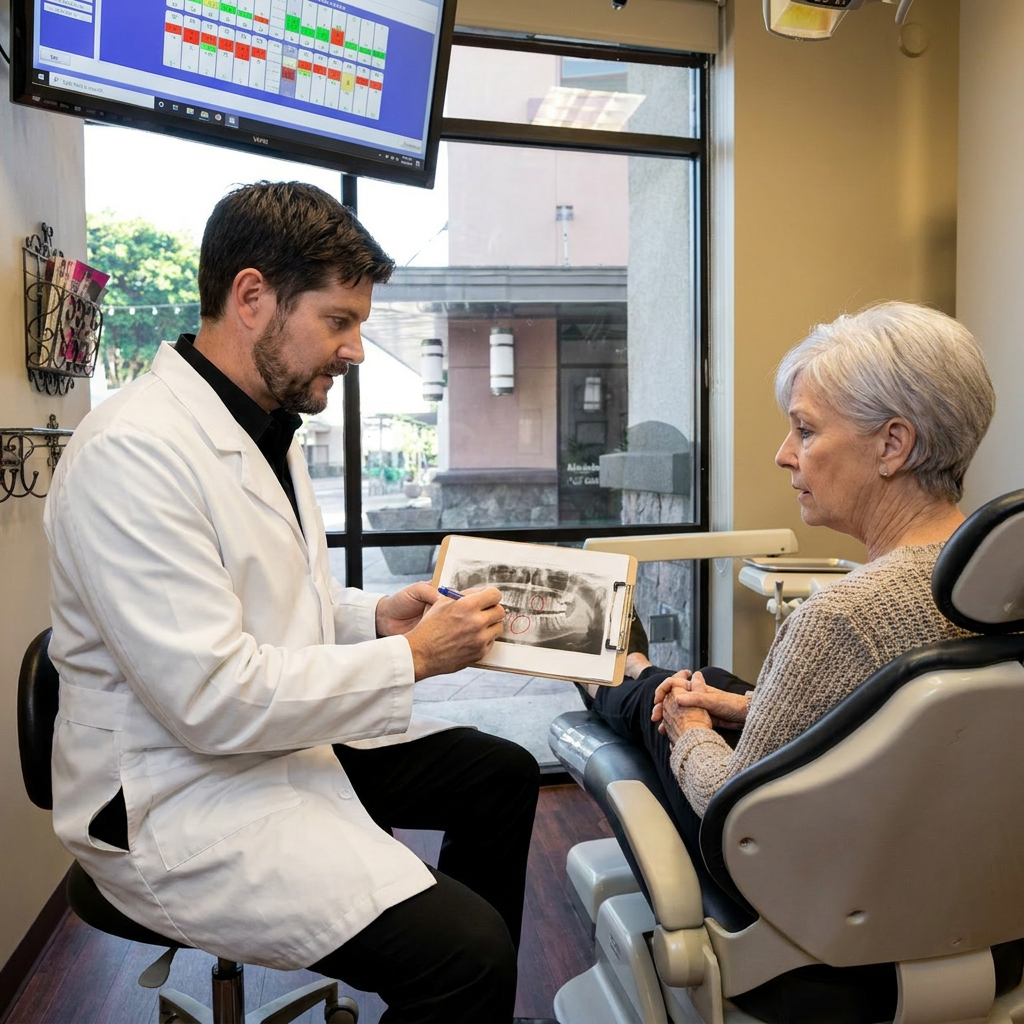
Gum disease doesn't always hurt, which is why many people in Glendale, AZ don't catch it until their dentist spots bone loss during exams & x-rays. Smokers, people with diabetes, and anyone who has gone a few years without dental cleanings face higher risk. The good news is that early-stage gum disease is reversible, and even advanced cases respond well to treatment when caught in time.
What to Expect During Your Visit
Your dentist starts with a thorough exam of your gums, measuring the small pockets between each tooth and the gum line. x-rays may be taken to check for bone changes beneath the surface. If gum disease is caught early, a professional cleaning may be all you need. For deeper pockets, the team numbs the area so you stay comfortable while they clean below the gum line.
Most patients feel mild soreness for a day or two afterward, similar to a light bruise. Your gums may look pinker and feel tighter within the first week. A follow-up visit lets your dentist track how the tissue is healing and decide if additional periodontal treatment is needed to keep things on track.

Before Your Appointment
- 01
Write down where you notice bleeding, swelling, or soreness along your gumline so your dentist can focus the exam on those areas.
- 02
Skip brushing aggressively near any tender or puffy spots for 24 hours before your visit to avoid masking signs of gum inflammation.
- 03
Bring a list of all medications you take, including blood thinners, since these directly affect gum tissue response during probing.
After Your Appointment
- 01
Rinse with warm salt water two to three times a day for the first week to keep treated gum tissue clean and calm.
- 02
Switch to a soft-bristled toothbrush and use gentle, short strokes along the gumline to avoid irritating healing tissue.
- 03
Hold off on smoking for at least 72 hours, since tobacco slows blood flow to the gums and delays tissue repair.
Advanced Gum Disease Technology
Treating gum disease used to rely heavily on manual scaling with hand instruments alone. Today, ultrasonic scalers do much of the heavy lifting. These tools vibrate at thousands of cycles per second to break apart calculus deposits while flushing bacteria out of periodontal pockets with a steady stream of water. Most patients find the process more comfortable than traditional scraping.
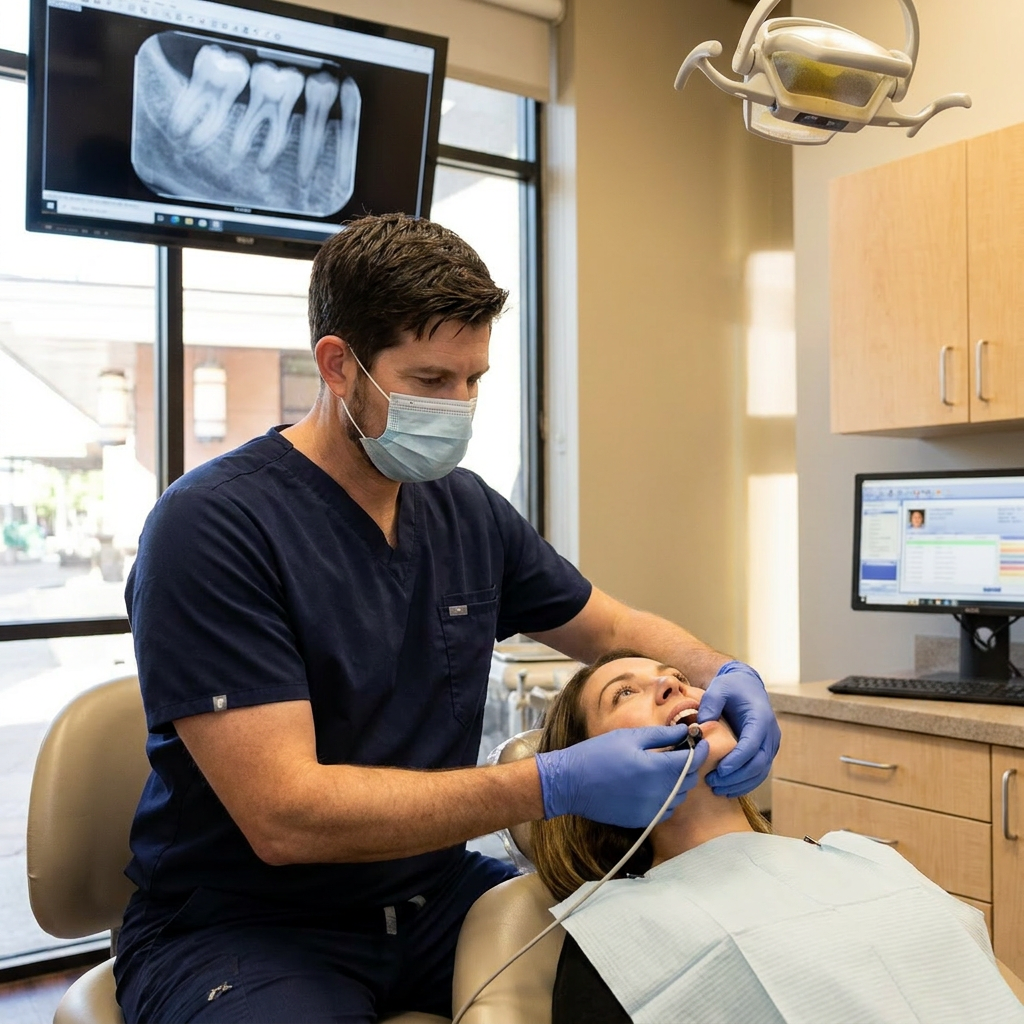
At Arrowhead Foothills Family Dentistry in Glendale, AZ, digital x-rays play a key role in tracking bone levels over time. They produce images in seconds using up to 80 percent less radiation than older film-based systems, and your dentist can zoom in on specific areas to measure pocket depth changes with precision. That kind of detail helps the team adjust your treatment plan based on how your gums are actually responding.
Why Our Patients Love Us
Real feedback from the families and neighbors we treat every week at our Glendale, AZ practice. These are the moments that remind Dr. Steele, Dr. Howard, and our whole team why we do this work.

-
-
-
-
-
Had a dental emergency and they got me in within a couple hours. They are full service so was able to make a crown while I waited. Had me in and out in 2 hours. So thankful did not have to go around with a cracked tooth. Highly recommend them

-
-
-
-
-
This practice is great. Everyone is so nice and professional. I decided to use them for my orthodontic journey. Andrea is my tech/dental assistant. She is so adorable and so patient. I’m proving to be a difficult case which means we get to see each other a lot!! I feel like I’m part of the AFD family. They are the best!
-
-
-
-
-
Highly recommend! Doctors and staff does an amazing job. Your in the best care here at Arrowhead foothills dentistry. Come and check it out, you will not be disappointed. Let's make Teeth great again!!
-
-
-
-
-
High quality dental care and services. Friendly and professional staff . Dr. Steele cares for his patients by being proactive for your future health. Been a patient here over 10 and will be long term.
Frequently Asked Questions
Can gum disease come back after treatment?
Yes, gum disease can return if bacteria build up again along the gumline. Most patients stay healthy with professional cleanings every three to four months and consistent brushing and flossing at home.
Is gum disease linked to other health problems?
Research connects untreated gum disease to higher risks of heart disease, diabetes complications, and respiratory infections. Treating the infection in your gums reduces bacterial load throughout your body.
How often will I need follow-up visits after gum disease treatment?
Most patients return every three to four months for the first year. After that, your dentist may extend the interval to every six months once your gum measurements stay stable.
Can I get gum disease treatment while pregnant?
Routine gum disease treatment is generally safe during the second trimester. Hormonal changes in pregnancy can actually worsen gum inflammation, so treating it sooner helps protect both your health and your baby's.
What happens if I wait too long to treat gum disease?
Untreated gum disease gradually destroys the bone that holds your teeth in place. Teeth can loosen or shift, and some patients eventually need Dental Implants or Dentures to replace teeth that could have been saved with earlier care.
Stay Informed with Expert Insights & Tips About Gum Disease
No Blog Posts Yet
We're working on new articles to help you care for your smile. Check back soon for updates from Arrowhead Foothills Family Dentistry
Connect {{i}}With Our Team{{/i}}
We're welcoming new patients and would love to see you. Whether it's a routine checkup or your very first visit, our team is here to help. Reach out online, give us a call, or stop by our Glendale office.
OFFICE HOURS
Monday – Wednesday: 7:00 AM – 5:00 PM
Thursday: 9:00 AM – 5:00 PM
Friday – Sunday: ClosedCONTACT
(602) 978-9794
DENTAL EMERGENCY?
We offer same-day emergency appointments to help you find relief fast. Call us immediately at (602) 978-9794

Thank you for booking your appointment!
We’ve received your request and will contact you soon to confirm the details. We look forward to seeing you at Arrowhead Foothills Family Dentistry!