

Dental Bridges in Glendale, AZ
Replace missing teeth with a custom dental bridge that restores your bite and completes your smile.
What Are Dental Bridges?
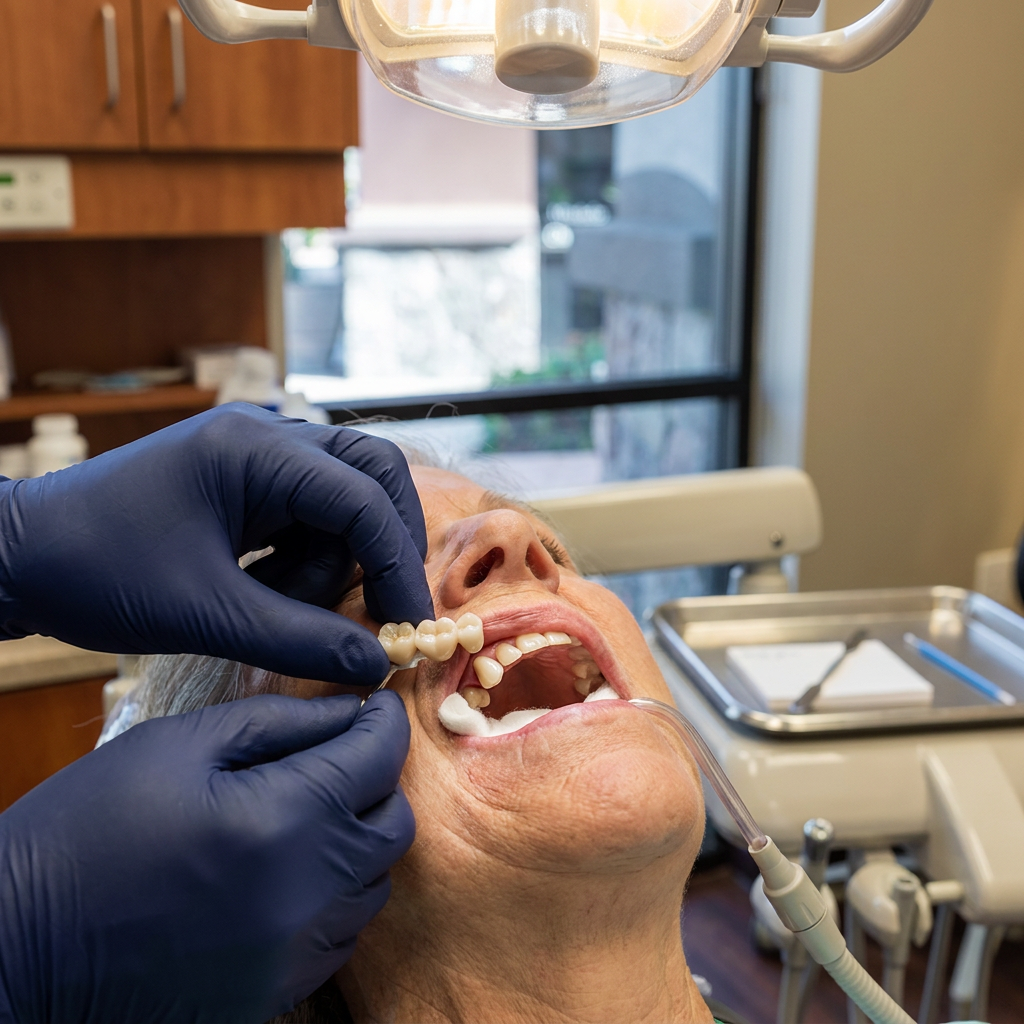
A missing tooth does more than leave a gap in your smile. The teeth on either side start shifting toward the empty space, your bite changes, and chewing becomes harder on one side than the other. Dental bridges solve that problem by anchoring a replacement tooth to the healthy teeth next to the gap, closing it permanently.
The anchor teeth receive dental crowns that act as supports, and a custom false tooth (called a pontic) sits between them. The whole unit is cemented in place, so it feels and functions like your natural teeth. Most patients at Arrowhead Foothills Family Dentistry are back to eating normally within a week or two of placement.
Benefits of Dental Bridges
Dental bridges do more than fill a space. They restore the way you bite, speak, and feel when you smile.

Chew on Both Sides Again
A missing tooth forces you to favor one side of your mouth, which wears down healthy teeth faster. A dental bridge spreads chewing pressure evenly so every tooth shares the load the way it should.
Neighboring Teeth Stay Put
Teeth next to a gap slowly drift and tilt into the empty space over months. A dental bridge locks them in position, preventing the shifting that leads to bite problems and harder-to-clean angles.

Matches Your Natural Smile
Your dentist shade-matches each pontic to the teeth around it and shapes the contour to follow your natural gum line. Most people at Arrowhead Foothills Family Dentistry can't tell which tooth is the replacement.
Is a Dental Bridge Right for You?

If you've lost a tooth to decay, injury, or a tooth extraction, you already know how it changes everyday life. Chewing shifts to one side. You stop smiling as wide. Over time, the teeth next to that gap start drifting out of position, which can create bite problems and make future dental work harder. Dental bridges solve all of this by filling the space before those changes take hold.
Adults of almost any age can be good candidates, as long as the teeth on either side of the gap are healthy enough to support dental crowns that anchor the bridge. Your dentist at Arrowhead Foothills Family Dentistry will check those supporting teeth during exams & x-rays and let you know exactly what to expect. Even patients who have lived with a missing tooth for years are often surprised at how straightforward the process turns out to be.
What to Expect During Your Visit
Your dentist numbs the treatment area completely before any work begins, so you feel pressure at most. The teeth on either side of the gap are gently reshaped to accept dental crowns that will anchor the bridge. Impressions or digital scans capture the exact fit, and a temporary bridge goes on the same day. Most visits run about an hour.
You may notice mild sensitivity for a day or two, which usually fades on its own. Once your permanent bridge is placed at a short follow-up visit, it locks into your bite right away. Most patients are chewing normally within a few days and find the bridge feels natural within the first week.
Before Your Appointment
- 01
Eat a full meal before you arrive, since the numbness around your prepared teeth can last two to three hours afterward.
- 02
Mention any sensitivity or pain in the teeth next to the gap so your dentist can check them before shaping the anchor teeth.
- 03
Take any prescribed anti-anxiety medication at the time your dentist recommended, especially if multiple teeth will be prepped.
After Your Appointment
- 01
Thread floss under the pontic daily using a floss threader or interdental brush to keep the gumline beneath your bridge clean.
- 02
Stick to softer foods like pasta, eggs, and cooked vegetables for the first three to four days while your abutment teeth adjust.
- 03
Rinse gently with warm salt water two to three times a day for the first week to help the tissue around your anchor teeth heal.
Advanced Bridge Technology
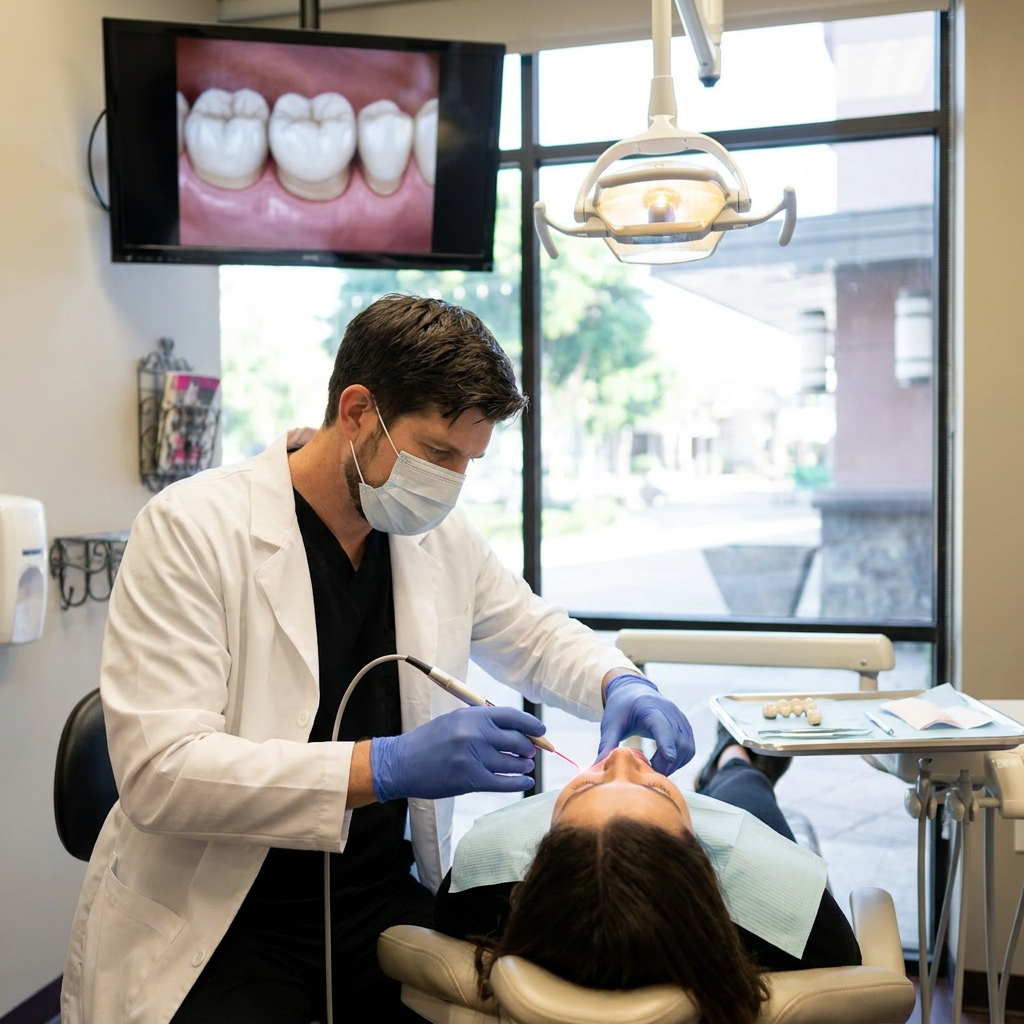
Digital impressions have replaced the thick putty trays that used to make getting a mold uncomfortable. A handheld scanner captures your teeth in a few minutes, producing a 3D model accurate to about 50 microns. That precision means your bridge fits snugly from the start, with less adjustment time in the chair.
Today's dental bridges are milled from high-strength ceramics like zirconia, which resist chipping better than older porcelain-fused-to-metal designs and match the translucency of real enamel. Your dentist in Glendale, AZ can also shade-match the pontic to your surrounding teeth digitally, so the final result blends in rather than standing out. The combination of digital scanning and modern materials makes the process faster and the results more lifelike than even five years ago.
Why Our Patients Love Us
Real feedback from the families and neighbors we treat every week at our Glendale, AZ practice. These are the moments that remind Dr. Steele, Dr. Howard, and our whole team why we do this work.

-
-
-
-
-
Had a dental emergency and they got me in within a couple hours. They are full service so was able to make a crown while I waited. Had me in and out in 2 hours. So thankful did not have to go around with a cracked tooth. Highly recommend them

-
-
-
-
-
This practice is great. Everyone is so nice and professional. I decided to use them for my orthodontic journey. Andrea is my tech/dental assistant. She is so adorable and so patient. I’m proving to be a difficult case which means we get to see each other a lot!! I feel like I’m part of the AFD family. They are the best!
-
-
-
-
-
Highly recommend! Doctors and staff does an amazing job. Your in the best care here at Arrowhead foothills dentistry. Come and check it out, you will not be disappointed. Let's make Teeth great again!!
-
-
-
-
-
High quality dental care and services. Friendly and professional staff . Dr. Steele cares for his patients by being proactive for your future health. Been a patient here over 10 and will be long term.
Frequently Asked Questions
How long do dental bridges typically last?
Most dental bridges last 10 to 15 years, and some hold up even longer with consistent oral hygiene. Porcelain and zirconia options tend to be the most durable for everyday chewing and biting forces.
Can I eat normally with dental bridges?
Yes. After a short adjustment period of about a week, most patients eat steak, apples, and other firm foods without trouble. Sticky candies like taffy are the main thing to avoid long term.
How do dental bridges compare to dental implants?
Dental implants replace the root and the crown independently, while dental bridges use neighboring teeth for support. Dental bridges work well when those adjacent teeth already have large fillings or need dental crowns.
Will a dental bridge affect the way I speak?
Missing teeth often cause lisping or slurring more than a bridge does. Most patients notice clearer speech within a few days as the tongue adjusts to the new tooth surface in the gap.
How often does a dental bridge need to be replaced?
Replacement timing depends on wear and gum health. Your dentist checks the fit at routine visits and can spot early signs of loosening. Keeping the gumline clean with a floss threader helps extend its life.
Stay Informed with Expert Insights & Tips About Dental Bridges
No Blog Posts Yet
We're working on new articles to help you care for your smile. Check back soon for updates from Arrowhead Foothills Family Dentistry
Connect {{i}}With Our Team{{/i}}
We're welcoming new patients and would love to see you. Whether it's a routine checkup or your very first visit, our team is here to help. Reach out online, give us a call, or stop by our Glendale office.
OFFICE HOURS
Monday – Wednesday: 7:00 AM – 5:00 PM
Thursday: 9:00 AM – 5:00 PM
Friday – Sunday: ClosedCONTACT
(602) 978-9794
DENTAL EMERGENCY?
We offer same-day emergency appointments to help you find relief fast. Call us immediately at (602) 978-9794

Thank you for booking your appointment!
We’ve received your request and will contact you soon to confirm the details. We look forward to seeing you at Arrowhead Foothills Family Dentistry!